
Pool Fence Rules in Toronto: Enclosure Permits, Heights and Gates
Toronto's pool enclosure rules in plain language: the permit and zoning certificate, 1.2 m minimum height, gate latches, setbacks and temporary fencing.
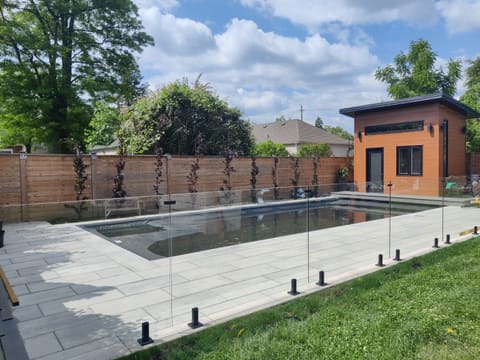
A pool enclosure is the one part of a backyard where the rules are not negotiable — and in Toronto they come before the first shovel goes in. The enclosure also shapes the whole design: where the gate lands, how the house opens onto the pool, what the fence is made of and how it looks from the kitchen window. This guide sets out what Toronto's fence by-law requires, in the order you will meet it.
For how pool enclosures fit into a full build, see our pools and fences pages.
Step one: the enclosure permit comes before excavation
Toronto's fence by-law, Municipal Code Chapter 447, states that no one shall excavate for or erect a swimming pool without first obtaining a permit for a swimming pool enclosure for the proposed pool. The application has to show where the pool sits relative to lot lines and buildings, and give complete details of the enclosure.
According to the City's Pool Fence Enclosure Permit form, a complete application includes the form, a Zoning Certificate, and zoning-approved site plans. The Zoning Certificate is its own step: the City's zoning certificate page asks for a fully dimensioned site plan showing the pool, distances to the house and lot lines, doors and windows near the pool, pool equipment locations, the proposed fence's location, height and material, and the percentage of hard versus soft landscaping.
In practice, that means the pool layout, the patio and the planting plan need to be settled early. Changing the hardscape later can change the numbers on the zoning review.
Minimum height
The City's fence page and Table 2 of Chapter 447 set the minimum enclosure height:
| Property | Minimum enclosure height |
|---|---|
| Single residential | 1.2 metres |
| Multiple residential | 1.8 metres |
| Non-residential | 1.8 metres |
Height is measured above the highest outside grade within one metre of the enclosure, at any point along it. On a sloped yard or beside a raised planter, that is where enclosures fail inspection. The maximum height still follows the regular fence limits in the by-law.
Where the fence can go
Chapter 447 sets construction standards for the enclosure, including any gate. It must:
- be no closer than 1.2 m horizontally to the water's edge;
- be no closer than 1 m to anything outside that could help someone climb it — unless the enclosure is at least 1.8 m high for at least 1 m on each side of that object;
- have no element between 100 mm and 1.2 m above grade on the outside that could be used to climb it; and
- have a non-climbable facing on the outside.
Design consequences: horizontal slat fences, which are popular for privacy, are climbable from the slatted side, so the slats face in or the pool side gets a separate compliant barrier. Planters, benches, outdoor kitchens and trees all need to sit outside that one-metre zone or be accounted for.
The house wall and doors
The by-law requires the enclosure to be designed so that entrances to any building are outside the enclosed area (with a limited exception for structures that do not give access to the exterior of the enclosure). If a wall of a building forms part of the enclosure, there can be no access to the pool area through that wall. The City's page adds that the enclosure cannot block the view of the pool from a window or doorway on the main living floor.
This matters for cabanas and pool houses. A poolhouse that opens straight onto the pool deck generally needs to sit inside the enclosure as a structure that does not provide access to the outside, or the fencing needs to be arranged around it. See building a pool house or cabana in Toronto.
Gates and latches
Every gate in the enclosure must be supported on substantial hinges. Under Chapter 447:
- A single gate must be self-closing and have a lockable, self-latching device located on the inside near the top of the gate, or on the outside at least 1.5 m above grade. It must be kept locked except when the pool area is in use.
- A double gate must have one leaf that is self-closing and self-latching as above, and a second leaf with a lockable drop bolt that extends at least 25 mm into concrete, asphalt or paving stones.
- If a gate closer is electrically powered, it needs a back-up that closes it automatically during a power failure, and automatic closers must meet the applicable CSA standards.
During construction
The by-law requires a compliant enclosure while the pool is under construction, which may be temporary fencing if authorized. Temporary fencing is specified in detail — steel T-posts at no more than 1.2 m centres embedded at least 600 mm, with plastic mesh at least 1.2 m high fastened and laced with steel cable — or another fence acceptable to an officer.
The pool cannot be filled until an officer has inspected and confirmed a complete permanent enclosure. The one exception: it may be filled behind compliant temporary fencing, but cannot be used until the permanent enclosure has passed inspection.
Related zoning rules
Toronto's Zoning By-law 569-2013 says the water surface of an outdoor pool is not counted in lot coverage, but it may not exceed 15% of the lot area (Chapter 10.5). Setbacks and soft-landscaping requirements also apply and vary by property.
Glass, aluminum or wood?
The by-law does not pick a material; it sets performance. Frameless or semi-frameless glass meets the non-climbable requirement cleanly and keeps sightlines from the house. Vertical aluminum pickets are durable and economical. Wood can work when the climbable side faces in and the outside is a smooth facing.
Frequently asked questions
How high does a pool fence have to be in Toronto? At least 1.2 m on a single residential property, measured above the highest outside grade within one metre of the fence.
Do I need a permit for a pool fence in Toronto? Yes. You need a pool enclosure permit before excavating for or installing the pool, and the application requires a Zoning Certificate.
Can my house wall be part of the pool enclosure? Only if there is no access to the pool area through that wall. Doors from the house cannot open into the enclosed pool area.
How far does the fence need to be from the pool? At least 1.2 m from the water's edge.
Can I fill the pool before the permanent fence is up? Only behind compliant temporary fencing, and the pool cannot be used until the permanent enclosure passes inspection.
Do hot tubs need an enclosure? Chapter 447 defines what counts as a swimming pool; check how your hot tub or swim spa is treated with the City before you plan around it. Hot tubs and swim spas can be planned into a Mako project as part of the overall backyard.
Designing it properly from the start
The best pool enclosures disappear into the design: glass along the view line, solid privacy where you need it, gates placed where people actually walk. See our pools page or request a quote.
General information current as of November 2026. Confirm requirements with the City of Toronto for your property.
Sources
- toronto.ca/legdocs/municode/1184_447.pdf
- toronto.ca/city-government/public-notices-bylaws/bylaw-enforcement/fences/
- toronto.ca/services-payments/building-construction/building-permit/before-you-ap...
- toronto.ca/wp-content/uploads/2021/03/972b-Pool-Fence-Enclosure-Permit-Applicati...
- toronto.ca/zoning/bylaw_amendments/ZBL_NewProvision_Chapter10_5.htm
This guide is general information, not legal or engineering advice. Rules and fees change; confirm requirements for your property with your municipality.

About the author
Stephan Tosevski
Stephan Tosevski leads Mako Construction. Mako Construction has built high-end outdoor living spaces across Toronto & the GTA since 2016 — decks, cabanas, pergolas, landscaping, pools, outdoor kitchens, and hot tub and swim spa installations. Fully insured, with permit-ready projects and professional site management from consultation to turnover.
Related guides
Guide
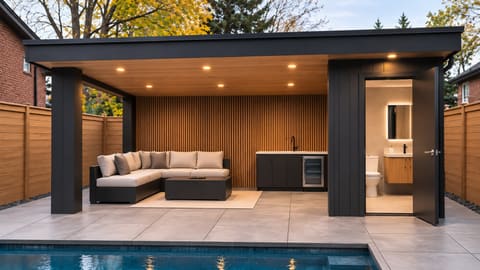
Pool House With a Bathroom: Plumbing, Permits and Layout
Planning a pool house with a bathroom in Toronto? See how plumbing triggers a permit, what zoning allows, and how to lay out the washroom. Read first.
Guide
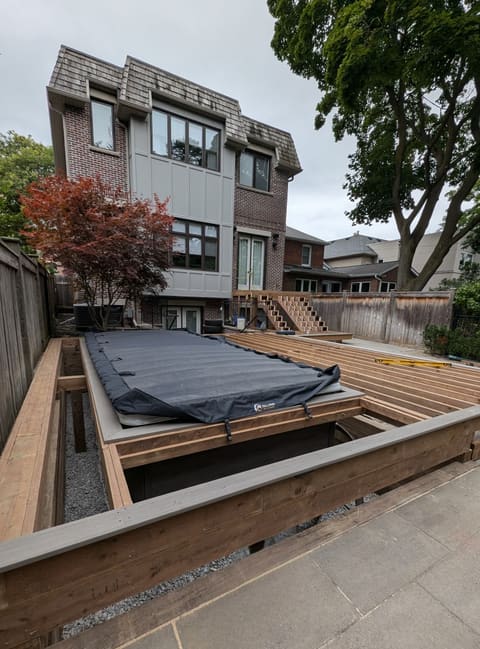
Best Time of Year to Build a Deck or Pool in Ontario
The best time of year to build a pool in Ontario: how winter planning, spring starts, fill rules and booking lead times shape your pool and deck schedule.
Guide
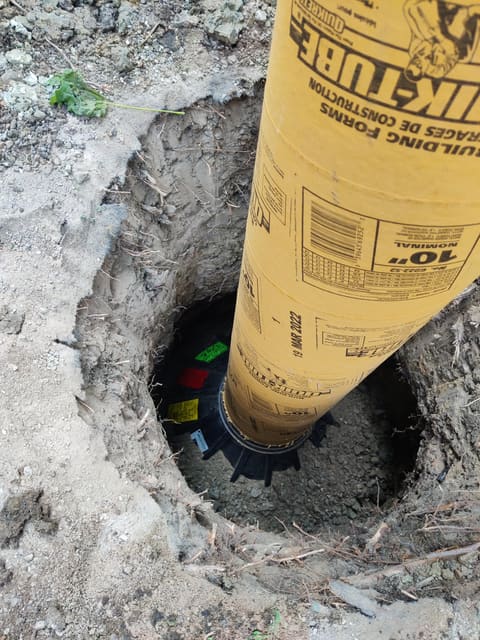
Call Before You Dig in Ontario: Locates for Backyard Projects
Call before you dig in Ontario: how Ontario One Call (Ontario Dig Authority) locates work, what private lines they miss, and how to plan. Read the guide.
Guide
Cabana Ideas for Pools: Layouts for Changing, Storage, Bar and Lounge
Cabana ideas for pools: layouts for changing, storage, a bar and a lounge, plus the planning points that shape a modern pool cabana design.
See also our Pools service.