
Call Before You Dig in Ontario: Locates for Backyard Projects
Call before you dig in Ontario: how Ontario One Call (Ontario Dig Authority) locates work, what private lines they miss, and how to plan. Read the guide.
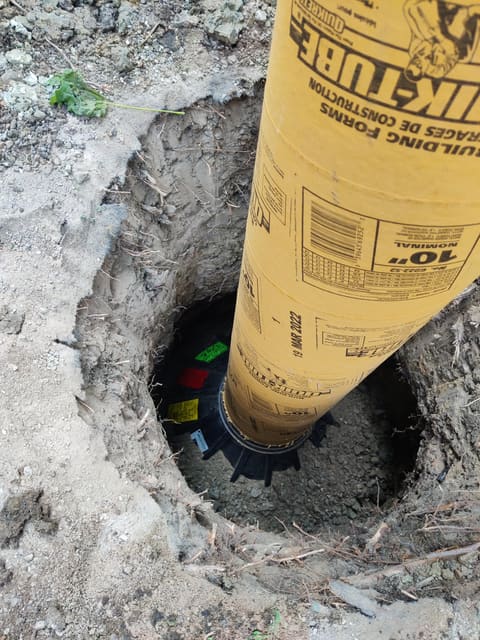
Any backyard project that breaks ground can reach buried lines: gas, power, communications, water and sewer. In Ontario, the way to find them before you dig is a free public utility locate. This guide explains how to call before you dig in Ontario, who does what once a request is in, why a public locate does not cover everything in a backyard, and how to build the timing into your plan.
The same steps apply whether you are planting trees, building a fence or deck, or reshaping the whole yard. If you are planning the second kind of project, our landscaping and hardscaping service starts with a site review where underground conditions are one of the things that shape the design.
What Ontario One Call and Ontario Dig Authority are
Ontario One Call now operates as Ontario Dig Authority. According to its website, it is a public safety administrative authority and the communication link between people planning to dig and the owners of buried infrastructure, who are required to provide locates. The organization was established in 1996 and, per its own timeline, the Ontario Underground Infrastructure Notification System Act, 2012 set out by law that anyone in Ontario must contact it before they dig.
Two details from its site are worth knowing:
- It does not mark anything itself. Ontario Dig Authority relays your dig information to the infrastructure owners, and each owner arranges the marking or confirms its lines are not affected.
- It is free. Ontario Dig Authority states that requesting a locate is free, required by law, and that utility locators mark their lines at no charge.
You will still hear both names. Ontario One Call, Ontario Dig Authority and "click before you dig" all point to the same request process.
When you need to call before you dig in Ontario
The short answer from the official source: locates are required for any project that breaks ground, no matter the size or depth of the excavation. Ontario Dig Authority's homeowner guidance names examples that include planting a tree, building a fence or deck, landscaping your property, and larger excavation.
For a backyard, that covers work such as:
- Fence post holes and deck footings.
- Pergola and cabana footings.
- Pool excavation, and trenches for plumbing or electrical.
- Outdoor kitchen bases, and gas or power runs.
- Grading, drainage and retaining wall work.
- Large tree and shrub planting.
The same rule applies whether you dig yourself or hire someone. The site says the person performing the excavation should submit the locate request, and that if you have hired a contractor you should confirm they have submitted it and received all the required responses before digging begins.
How the locate process works, step by step
Based on Ontario Dig Authority's published process:
- Submit a locate request. Single-address requests are completed within 5 business days. Projects covering multiple addresses or larger work areas are Advanced Requests, completed within 10 business days. The authority's glossary describes the minimum details as contact information, city, street, the two nearest intersecting streets and the type of work.
- Infrastructure owners respond. Each owner marks its buried lines or confirms clearance. Unless an owner provides a clearance, responses may include flags, paint or stakes.
- Wait for every response. You must wait until all notified owners have responded before digging.
- Review the complete locate package. The package includes a confirmation page and responses from the owners that were notified, and it should be kept available on site. Follow the written instructions from each owner.
- Keep the markings visible and dig carefully, respecting the marks and the locators' instructions.
- Request a new locate if the project changes. Ontario Dig Authority states this directly, and its contractor page says to submit a new request if the scope or location of the work changes.
Because the standard turnaround is business days, not hours, the request belongs early in the schedule. A build that needs to start on a given week needs the request in before that.
What the colours mean
According to Ontario Dig Authority, markings use these colour codes:
| Colour | Buried infrastructure |
|---|---|
| Red | Electric |
| Orange | Communication |
| Yellow | Gas, oil, steam |
| Green | Sewer, storm |
| Blue | Water |
| Purple | Irrigation, slurry |
| Pink | Temporary survey markings |
| White | Proposed excavation |
Take photos of the markings before work starts and keep them visible until the work is done. If paint is disturbed by weather or traffic, stop and sort it out before continuing.
What a public locate does not cover: private lines
This is the part homeowners most often miss. Ontario Dig Authority facilitates locates for public buried infrastructure. It says some underground infrastructure on private property is owned by the property owner and is not part of the public process.
Its examples of private infrastructure include:
- Gas lines to barbecues or pool heaters.
- Electrical lines to sheds, detached garages, lights or signs.
- Sewer and septic systems.
- Telecom or electrical lines feeding security cameras.
The authority's glossary also lists secondary service lines as private. The site says that if private infrastructure may be present, you are responsible for arranging a private locate. A private locate does not replace the public one: Ontario Dig Authority must always be contacted before digging.
Backyards often hold exactly these items: landscape lighting, a gas line to a barbecue, a pool heater feed, an irrigation system. Old lines may not appear on any drawing. Ask the household who has worked on the yard before, check your drawings and inspection records, and arrange a private locate where anything might be buried. The wiring and gas side of outdoor kitchens and pools is also work that licensed trades handle. Our guides to outdoor kitchens and pools explain how those elements fit into a full backyard plan.
Planning the timeline around locates
Locate timing interacts with the rest of the plan:
- Design stage. Ontario Dig Authority offers Design and Planning Requests that provide available records of buried infrastructure for planning and estimating. Its contractor page says these are for planning purposes only and do not provide valid locate paperwork or authorize excavation, and that participation by infrastructure owners is voluntary.
- Before excavation. A standard locate request, with the full response package received. Locates are valid for at least 60 days; request a new one if work will continue after that.
- Between phases. If the footprint changes or a new area opens up, a new request is needed.
- Site conditions. Footings, drainage runs and trenches all need to sit clear of marked lines. Our guide to backyard drainage in Toronto covers the drainage side of that coordination, and building near a protected tree covers roots and protected trees.
A short checklist for homeowners
- Identify who will be doing the excavation and confirm in writing who submits the locate request.
- Ask to see the complete locate package before work starts.
- List every private line you know or suspect: gas, power, lighting, irrigation, septic, camera wiring.
- Arrange a private locate if any of those might be in the dig area.
- Keep markings visible, and keep photos.
- Ask for a new locate if the project changes. We handle locates for our projects and use a private locate service.
Questions to ask any contractor
- Who submits the locate request, and have all responses been received before the first dig?
- Is the locate package kept on site, and will the crew review it?
- How are private lines identified?
- What happens to the schedule if a locate response is late or the scope changes?
Frequently asked questions
Is calling before you dig really required in Ontario?
Yes. According to Ontario Dig Authority, requesting a locate is free and required by law before any digging begins, under the Ontario Underground Infrastructure Notification System Act, 2012. It states that locates are required for any project that breaks ground, no matter the size or depth of the excavation, including fences, decks, tree planting and landscaping.
How far ahead should I request a locate?
Ontario Dig Authority says to submit the request at least 5 business days before a single-address project and 10 business days before a multi-address or larger project, and only if the intended dig will happen within the next 30 calendar days. You must then wait until all notified infrastructure owners have responded before you start to dig. Locates are valid for at least 60 days, though some infrastructure owners may give a longer period; check the validity on each response and request a new locate if you will still be digging after it expires. Build that wait into your schedule rather than treating it as a formality.
Does a locate mark everything in my yard?
No. The public process covers buried infrastructure owned by the participating owners. Ontario Dig Authority says some lines on private property belong to the owner, such as gas lines to barbecues or pool heaters, power to sheds or lights, and sewer or septic systems, and a private locate must be arranged if those may be present.
What if my project changes after the locate?
Request a new locate. Ontario Dig Authority says you must request a new one if your project changes, and its contractor guidance says to do so if the scope or location of the work changes before you continue. Treat a revised layout, a larger footprint or a new trench route as a change.
Plan your backyard with Mako
If you are planning a backyard build and want underground conditions, drainage and timing considered during design, request a quote. Bring photos of the yard and a note of any lines you know about, such as gas to a barbecue or power to a shed, and we will talk through the layout and the sequence of work. This guide is general information, so confirm requirements on the Ontario Dig Authority website.
Sources
- ontariodigauthority.ca/
- ontariodigauthority.ca/locates-overview/
- ontariodigauthority.ca/locates-overview/contractors/
- ontariodigauthority.ca/about-us/
- ontariodigauthority.ca/about-us/glossary/
This guide is general information, not legal or engineering advice. Rules and fees change; confirm requirements for your property with your municipality.

About the author
Stephan Tosevski
Stephan Tosevski leads Mako Construction. Mako Construction has built high-end outdoor living spaces across Toronto & the GTA since 2016 — decks, cabanas, pergolas, landscaping, pools, outdoor kitchens, and hot tub and swim spa installations. Fully insured, with permit-ready projects and professional site management from consultation to turnover.
Related guides
Guide
Best Privacy Fence Material for Ontario Winters
Best privacy fence material for Ontario winters: how cedar, composite, aluminum and masonry handle frost, snow and sun, and what to check before you build.
Guide
Does a Backyard Upgrade Add Value to a Toronto Home?
Backyard renovation ROI in Toronto: what makes an outdoor upgrade add value, which projects tend to pay back in daily use, and the mistakes that cost you.
Guide
Multi-Level Deck Design for Sloped GTA Lots
Multi level deck design for sloped GTA lots: how to plan levels, steps, guards, footings and drainage so a tiered deck works with your yard. See the checklist.
Guide
Pool Coping Options and Pool Deck Materials Compared
Compare pool coping options and pool deck materials, from stone to porcelain, for Ontario winters. See what to weigh before you choose.
See also our Landscaping & Hardscaping service.