
Best Privacy Fence Material for Ontario Winters
Best privacy fence material for Ontario winters: how cedar, composite, aluminum and masonry handle frost, snow and sun, and what to check before you build.
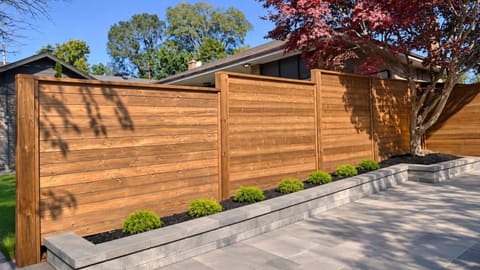
The best privacy fence material is not the same for every yard. It depends on how much maintenance you will accept, what the fence has to do besides block a view, and how it copes with an Ontario winter: freezing and thawing, wet snow, road salt spray near the street and strong summer sun. This guide compares the main options and explains the trade-offs worth weighing before you build.
If you are weighing styles and layouts as well as materials, our fence and privacy screen service shows what we design and build. The notes below are general information, and the City of Toronto's own pages are cited wherever a rule is mentioned.
What Ontario winters ask of a fence
A fence is a long, thin structure standing outside all year, so most failures start at the ground or at a joint. Four things matter most.
- Frost. Wet soil freezes, expands and thaws again many times a season. Posts that are shallow or poorly bedded can heave or lean, whatever the panels are made of. The post and footing system matters as much as the material you see.
- Moisture. Water sitting on end grain, at the base of a post or behind a panel is what rots wood and corrodes poor fasteners.
- Snow and wind load. A solid privacy fence catches wind like a sail, and snow piles against it. A fence that is solid from top to bottom needs a sturdier frame than a spaced one.
- Sun. Ultraviolet light fades stains and some finishes, and it dries timber out so it cracks.
Best privacy fence material: how the options compare
The table is a general guide to character, not a specification. Lifespan and warranty details belong to the manufacturer, so check their published guidance for any product you are considering.
| Material | Look | Upkeep | Main watch-out |
|---|---|---|---|
| Cedar | Warm, natural, can be stained or left to silver | Periodic cleaning and re-staining if you want to keep the colour | Needs care at the base and cut ends; weathers and moves over time |
| Pressure-treated wood | Plainer, takes paint or stain | Similar to cedar | Needs time to dry before finishing; can twist and check |
| Composite | Uniform, low-gloss, designed to resist rot | Mostly washing | Higher up-front cost than wood; colour and heat behaviour vary by product |
| Aluminum | Slim, modern, powder-coated | Very little | Can look cold if the design is not softened with planting or timber |
| Masonry or stone | Solid and permanent | Minimal | Needs proper footings; a bigger project |
Cedar
Cedar is the traditional choice, and many homeowners still prefer it because it looks like a natural part of the garden. It contains natural oils that help it resist decay, but it is still a timber product. Cedar fence lifespan in Ontario depends less on the species than on the details: how deep and well-drained the posts are, whether the boards sit clear of the soil, how the tops are capped, and whether the fence is cleaned and re-finished on a schedule.
Cedar also moves. Boards shrink, check and shift between seasons, and a fence that was tight in July may show small gaps by March. That is normal, and a good design allows for it with board spacing and fastener choice rather than fighting it. If you want to keep a warm brown tone, plan on re-staining.
Pressure-treated wood
Pressure-treated lumber is a practical choice for posts and rails because the treatment is aimed at ground contact. As a visible fence it is plainer than cedar and needs to be finished correctly once it has dried. It suits a tighter budget, with the same maintenance rhythm as any wood fence.
Composite
Composite fencing is attractive to people who like the look of wood but do not want to stain. It resists rot, and many products are designed to keep their colour more consistently than timber does. In the composite fence vs wood debate, the real difference is how you spend your effort: composite costs more at the start and asks for less later, while wood costs less at the start and asks for regular attention.
Two cautions apply. First, products differ a great deal in construction, finish and how they handle heat and expansion, so rely on the manufacturer's installation guidance and published performance information, not on general claims. Second, composite still needs a well-built frame and footings. A stable post is what keeps any fence straight through frost.
Aluminum
Powder-coated aluminum does not rot and needs little upkeep, which suits a long boundary where you would rather not re-stain every few years. For a modern look, aluminum frames with horizontal slats, or aluminum combined with timber or composite infill, can deliver real privacy without a heavy visual mass. The weak point is atmosphere: an all-metal fence can feel hard in a garden, so it works best when it is paired with planting, lighting and softer materials.
Masonry and stone
A masonry wall or stone-clad pier is the most permanent answer and can anchor a fence line, a gate or an entry. It needs engineered footings and careful drainage to survive frost, and it is a larger project than a typical fence. A common approach is to use masonry piers only at key points, such as gates and corners, with lighter infill between them.
Three questions that matter more than the material
1. How is it anchored?
Ask how deep the posts go, what they are set in, and how water drains away from the base. The right answer depends on the soil, and the Toronto area includes plenty of clay. A good installer can explain the plan for your yard in a few sentences.
2. Is it solid, or does it let some air through?
A fully solid fence gives the most privacy but takes the most wind and holds the most snow at its base. A fence with slim, controlled gaps, or a horizontal slat design with measured spacing, can reduce the load while still blocking sightlines from neighbours.
3. What else does it have to do?
A fence can also hide mechanical equipment, hold lighting, carry climbing plants, frame a gate or screen a hot tub. If it has several jobs, choose the material and the structure together. Our guide to deck privacy screen ideas shows how lighter screens can work alongside a fence.
Rules to check before you choose
Privacy is only one requirement. The City of Toronto's Fences page explains that the Fence Bylaw sets standards for fence height, material and structure, and that the rules vary with where the fence sits on the property. A few points from that page affect material choice directly:
- Fences generally cannot contain barbed wire, chicken wire or other barbed or sharp material, and sheet metal and corrugated metal panels are not allowed.
- Any fence within 2.4 metres (about 7 ft 10 in.) of a driveway must be of open-fence construction for at least 2.4 metres from the lot line where the driveway begins. A solid privacy panel is not suitable there.
- If you have a swimming pool, the pool enclosure has its own rules. According to the City, permitted pool fence types include small-gauge chain-link, wood fencing with vertical or horizontal boards, a metal picket fence, a glass panel fence and a masonry wall, and the enclosure needs a non-climbable material on the outside. Where a pool fence separates the pool from the house, the City says it must be open mesh chain-link or other open construction that does not restrict a view of the pool from the main living area. A solid privacy fence does not meet that requirement.
- Height limits depend on where the fence sits, so check Table 1 of the bylaw for your situation. We explain how this works in our guide to modern privacy fences and height rules in Toronto.
These rules are those of the City of Toronto. Other municipalities have their own, so check the local bylaw before you plan a fence outside Toronto. The City's page also says the Municipal Licensing and Standards district office can clarify requirements for a specific property.
Digging for fence posts triggers one more requirement. Ontario Dig Authority says that if you are building a fence you must request a public utility locate before you dig, and it asks you to contact them at least five business days before a single-address project. Utility owners mark their lines for free. Private lines, such as gas to a barbecue or power to a shed, are the owner's responsibility to locate separately.
A short checklist before you decide
- Decide how much maintenance you will realistically do. Be honest, because a fence that needs staining every few years looks worse than a lower-maintenance one that is ignored.
- Choose the post and footing system first, then the visible material.
- Check the height and material rules that apply to your lot, and any pool enclosure requirements if you have or plan a pool.
- Look at the fence from inside and out, and think about how it will look in February.
- Ask for the manufacturer's installation and care documents for any engineered product.
- Make sure utility locates are requested before any digging begins.
Frequently asked questions
What is the best privacy fence material for Ontario winters?
There is no single answer. Cedar suits people who like a natural look and accept upkeep. Composite and aluminum suit those who want less maintenance. In every case the posts and footings decide how well the fence handles frost, so a well-anchored fence in any material beats a poorly anchored fence in a premium one.
Is composite better than wood for a fence?
Composite resists rot and usually needs only washing, while wood needs periodic finishing. Composite generally costs more up front and its performance varies between products. Whether it is better depends on your budget, your appetite for maintenance and how the fence will be used. Follow the manufacturer's installation guidance for any composite system.
How long does a cedar fence last in Ontario?
It varies widely with how the fence is built and cared for. Post depth, drainage, sun exposure, finish and cleaning all play a part, so we do not quote a single number. Ask the installer how the posts are set, keep boards clear of the soil, and plan to maintain the finish if you want the colour to hold.
Can a privacy fence be used as a pool fence?
Not automatically. The City of Toronto sets specific rules for pool enclosures, including permitted fence types, a non-climbable outside face and open construction where the fence separates the pool from the house. A solid privacy fence does not meet the open-construction requirement in that case. Check the bylaw and the City's pool enclosure requirements before you design the fence.
Plan a fence that lasts
If you are choosing a fence material for your Toronto or GTA yard, we can look at the site, the privacy you need and the rules that apply, then design the fence with the posts, finish and details to match. Request a quote to talk through your project.
Sources
- toronto.ca/city-government/public-notices-bylaws/bylaw-enforcement/fences/
- ontariodigauthority.ca/locates-overview/
This guide is general information, not legal or engineering advice. Rules and fees change; confirm requirements for your property with your municipality.

About the author
Stephan Tosevski
Stephan Tosevski leads Mako Construction. Mako Construction has built high-end outdoor living spaces across Toronto & the GTA since 2016 — decks, cabanas, pergolas, landscaping, pools, outdoor kitchens, and hot tub and swim spa installations. Fully insured, with permit-ready projects and professional site management from consultation to turnover.
Related guides
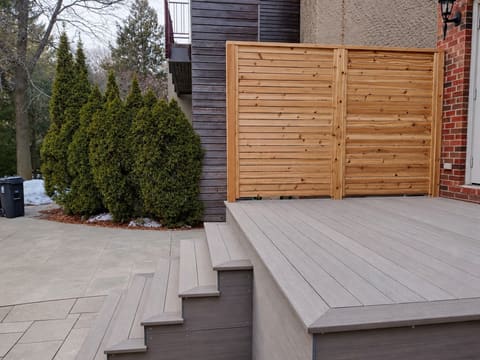
Guide
Deck Privacy Screen Ideas for Toronto Backyards
Deck privacy screen ideas for Toronto yards: slat walls, panels, planters and louvres, plus the height rules to check first. Plan yours with confidence.
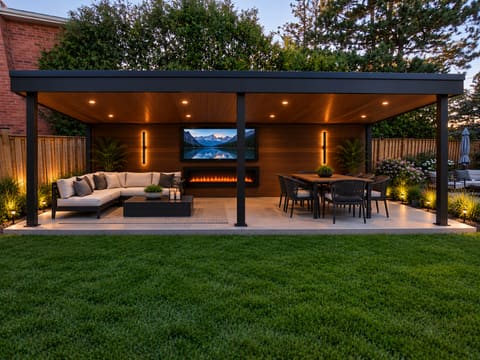
Guide
Outdoor Lighting Ideas for the Backyard: Integrated Light for Decks, Pergolas and Fences
Outdoor lighting ideas for the backyard: how to build light into decks, pergolas and fences so the space looks refined at night. See the options.
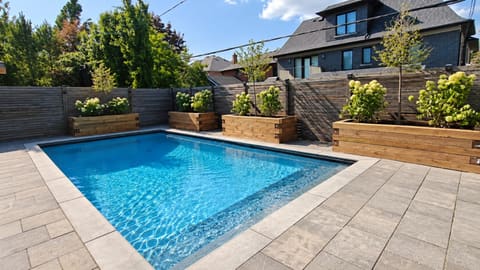
Guide
Markham Pool Enclosure Bylaw: What to Know Before You Build a Pool
Markham pool enclosure bylaw explained: fence height, gates, temporary fencing, inspection and what the City publishes on fees. Plan before you build a pool.
Guide
Decks, Pools and Fences in Markham: What Needs a Permit
Markham's rules for decks, accessory buildings, pools, hot tubs and fences: the 10 m² and 600 mm deck triggers, pool enclosure standards and fence heights.
See also our Fences & Privacy Screens service.