
Outdoor Lighting Ideas for the Backyard: Integrated Light for Decks, Pergolas and Fences
Outdoor lighting ideas for the backyard: how to build light into decks, pergolas and fences so the space looks refined at night. See the options.
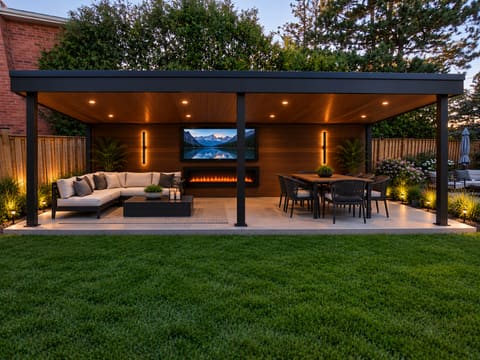
Most backyards are used after dark far more than people expect: dinner on the deck, a late conversation under the pergola, a walk to the gate. Good outdoor lighting ideas for the backyard come down to one principle. Light the surfaces and structures people use, keep fixtures out of sight, and let the build itself carry the wiring.
That is why lighting works best when it is designed with the structure rather than added afterwards. On a deck design and construction project, the ideal is to plan fixtures, cable routes and power while the framing is still open, so the finished deck shows the glow and not the hardware.
At Mako, we install low-voltage landscape lighting ourselves. For pot lights and anything on high voltage, we work with a licensed electrician, so that work is coordinated with the build rather than added at the end.
Outdoor lighting ideas for the backyard start with zones
Before choosing any product, walk the yard at night in your mind and list what needs light:
- Moving: steps, stair edges, the path from the door to the gate.
- Gathering: the dining table, the seating area, the outdoor kitchen.
- Looking: a tree, a stone wall, a pergola beam, the fence line.
- Staying dark: the places that should feel calm and let you see the sky.
Giving each zone its own control means you can switch on only what you need. A dim evening with just the steps and one soft layer overhead feels very different from a full dinner setting, and both can come from the same system.
Deck lighting ideas
A deck is the easiest place to hide light, because the structure gives you edges, risers, posts and soffits to work with.
Stair and riser lighting
Small fixtures set into the stair risers or under the tread nosing wash each step with a low pool of light. This is the most practical layer on any deck, since it makes the change of level visible without glare.
Recessed deck and fascia lighting
Low-profile lights set into the decking surface or the fascia board trace the shape of the deck. Used sparingly, they define the edges at night. Used in a grid across the whole surface, they can feel like an airport runway, so space them with intent.
Post caps and rail lighting
Post cap lights and slim lights under a handrail provide soft, even light at hand height. They suit decks where guests move around in the evening, and they pair well with either glass or aluminum railing. If you are still choosing, our comparison of glass and aluminum railing covers the trade-offs.
Under-bench and under-rail glow
A concealed strip under a built-in bench or along the underside of a top rail casts a gentle wash on the deck surface. It adds ambience without any visible fixture.
Plan it before the decking goes down
Cables for surface and riser lights need to be run through the framing before boards are fastened. Retrofitting is possible, but it usually means lifting boards or drilling through finished surfaces.
Decking choice also matters. Mako builds with AZEK, TimberTech, Teno and Texo, and each manufacturer publishes its own guidance on compatible accessories and installation. Check that guidance before choosing a lighting product for a composite or PVC surface, and make sure the lighting plan and the decking plan are settled together.
We are not tied to one lighting brand. The fixtures we choose depend on the look the client is after.
Pergola lighting ideas
A pergola frame is built for integrated light: beams, rafters and posts all carry wiring neatly.
- Recessed downlights in the beams. These give you focused light over a table without hanging fixtures that catch the eye.
- LED strips tucked into rafters or beam edges. Hidden strips bounce light off the timber or powder-coated surface, so you see the glow and the material, not the strip.
- Post-mounted wall washers. Light grazing down a post emphasizes its finish and adds depth.
- Dimmable pendants or lanterns over a dining area. A single statement fixture can anchor the space, as long as the pergola is designed to carry it.
- String or festoon lights. They suit a relaxed look, but they need properly planned anchor points and weather-rated cable, not an improvised hook.
Material matters here. Cedar and other timbers take warm light beautifully, while aluminum frames suit slim concealed channels. Our guide to aluminum vs wood pergolas explains how the two differ in detailing and upkeep, including how easily each can hide wiring.
If you may add a louvred roof, heater or fan later, plan the power for it now. Adding a circuit after the frame is finished costs more and shows more.
Fence lighting ideas
Fence lighting works in two ways. It can make the fence itself the feature, or it can use the fence as a backdrop to light what stands in front of it.
- Wash lighting along the fence line. Fixtures mounted low and aimed up, or high and aimed down, graze a horizontal-slat or board fence so the texture shows. This works best on modern privacy fences with clean, even lines.
- Post cap lights. Evenly spaced caps mark the boundary and make a long fence feel intentional. They suit a gate and driveway entrance too.
- Slot or recessed lighting in slat panels. A thin line of light set into a slat screen turns a plain wall into a feature, and it can double as a path marker.
- Gate and entry lighting. A single, well-placed light at the gate is both a welcome and a safety measure.
- Uplighting plants against the fence. Planting in front of a dark fence, lit from below, adds depth and lets the planting become the focus.
Fence designs change how light behaves. Our article on modern privacy fences in Toronto covers materials and styles, and it is worth deciding on the fence before the lighting, because slat spacing, board width and finish colour all shape the effect. See also our fences service page.
Layering light so the yard feels finished
Strong backyard lighting uses layers, each at a different height:
- Low light for safety: steps, paths and deck edges.
- Mid-level light for atmosphere: bench glow, post caps, wall washers.
- Overhead light for tasks and gathering: pergola downlights, pendants, kitchen lights.
- Accent light for features: trees, stone and planting.
You rarely need all four. Start with the layers the space actually needs and keep the rest in reserve.
Colour, glare and the neighbours
A few choices make the difference between a calm yard and an over-lit one:
- Choose a warm white colour for seating and dining areas. Cooler white can feel harsh and clinical outdoors.
- Keep the same colour across all fixtures. Mixed tones in one view look accidental.
- Shield and aim fixtures. The light source should not be visible from where people sit. Aim light down, or onto a surface, never into eyes or the neighbouring yard.
- Use dimmers and separate switches. Control is as important as the fixture.
- Use fewer, better-placed lights. Light should reveal the architecture, not compete with it.
Power, wiring and Ontario rules
Lighting is electrical work, and electrical work in Ontario has its own rules, separate from building permits.
According to the Electrical Safety Authority (ESA), the Ontario Electrical Safety Code requires almost all electrical work to be reported to ESA through a notification of work, which the ESA also calls a permit. ESA also states that having a building permit is not the same as filing an electrical notification, and that you may need both.
ESA also says that if you hire someone to do electrical work in your home, by law it must be a Licensed Electrical Contractor, and that a general contractor should confirm a Licensed Electrical Contractor will do the electrical portion.
Mako doesn't personally hold pool, gas or electrical licences; that work is done by our licensed partner subcontractors. For homeowners, the practical point is to ask any builder who will do the electrical work, to ask to see the contractor's ESA licence number, and to keep the ESA Certificate of Acceptance for your records and insurance.
Building rules can also touch a lighting plan indirectly. For example, the City of Toronto's permit guidance, as checked on 22 November 2026, lists constructing a deck more than 60 cm (24 in) above ground as work that needs a building permit, and says that compliance with the Zoning By-law is required even where no permit is. A raised deck with integrated lighting is still a raised deck. Rules differ between municipalities, so confirm the rules for your own city and property.
Questions to ask your builder
- Is the lighting designed with the structure, or added by a different trade afterwards?
- Where do cables run, and can they be reached later if a driver or transformer needs servicing?
- Who is doing the electrical work, and can I see their ESA licence number?
- Is every fixture rated for outdoor and wet locations?
- How are the lights controlled: switches, dimmers, timers or an app?
- What happens to the system in winter, when snow sits on the deck, pergola or fence?
Common mistakes
- Choosing fixtures before the structure is designed.
- Lighting everything evenly, with no hierarchy and no dark areas.
- Mixing colour temperatures across the yard.
- Leaving wiring until after the decking, roof or fence panels are finished.
- Aiming lights where they glare into seating areas or neighbouring windows.
- Forgetting a switch or dimmer for each zone.
Frequently asked questions
What is the best lighting for a deck?
Low, concealed light is usually the most useful: stair risers, a fascia glow and soft post or rail lighting. These make the surface and the steps visible without glare. Keep seating areas warm and dimmable, and add task light only where you cook or serve.
Can I add lighting to an existing pergola?
Often yes. Strip lights, downlights and wall washers can be added, but wiring is much neater when it is routed through the frame at build time. An existing structure may need surface-run channels, and any new electrical work should be done by a Licensed Electrical Contractor.
Do I need a permit to install outdoor lighting in Ontario?
Electrical work is generally reported to the Electrical Safety Authority through a notification of work, according to ESA, and that is separate from any building permit. The details depend on the type of work, so confirm your project with ESA at 1-877-372-7233.
Should fence lighting be on the fence or in front of it?
It depends on the fence. Post caps and slot lights suit slatted or board fences that are the feature. For a plain fence, lighting the planting in front lets the fence recede. Ask your builder to show you both options on a drawing before the fence goes in.
Planning lighting that belongs to the build?
If you are planning a deck, pergola or fence and want the lighting designed in from the start, request a quote and we will talk through the layout, the power and the finishes.
Sources
- toronto.ca/services-payments/building-construction/building-permit/before-you-ap...
- esasafe.com/notifications/what-you-need-to-know/
- esasafe.com/consumer-protection/hire-licensed/
This guide is general information, not legal or engineering advice. Rules and fees change; confirm requirements for your property with your municipality.

About the author
Stephan Tosevski
Stephan Tosevski leads Mako Construction. Mako Construction has built high-end outdoor living spaces across Toronto & the GTA since 2016 — decks, cabanas, pergolas, landscaping, pools, outdoor kitchens, and hot tub and swim spa installations. Fully insured, with permit-ready projects and professional site management from consultation to turnover.
Related guides
Guide
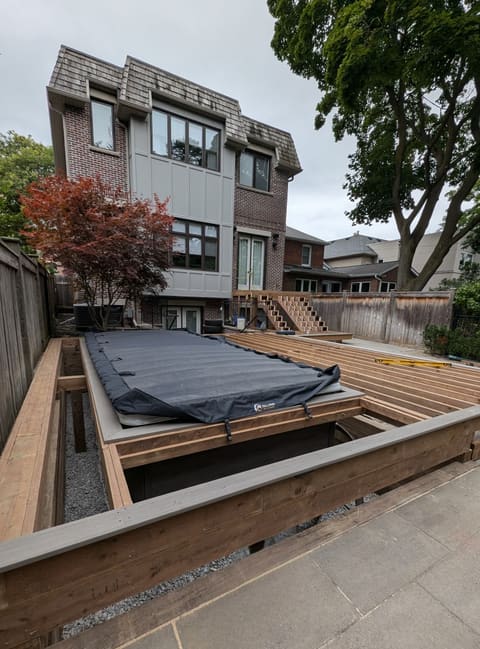
Best Time of Year to Build a Deck or Pool in Ontario
The best time of year to build a pool in Ontario: how winter planning, spring starts, fill rules and booking lead times shape your pool and deck schedule.
Guide
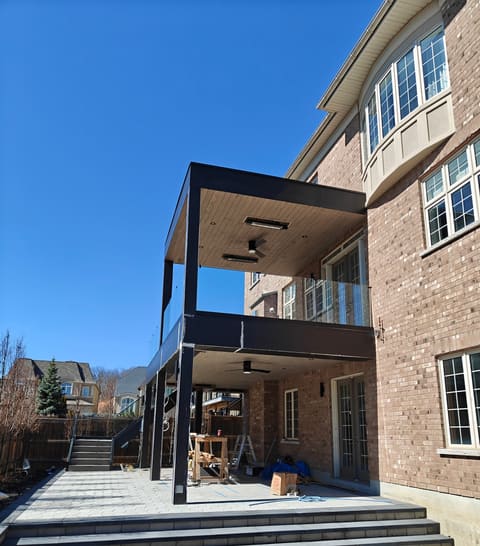
Multi-Level Deck Design for Sloped GTA Lots
Multi level deck design for sloped GTA lots: how to plan levels, steps, guards, footings and drainage so a tiered deck works with your yard. See the checklist.
Guide
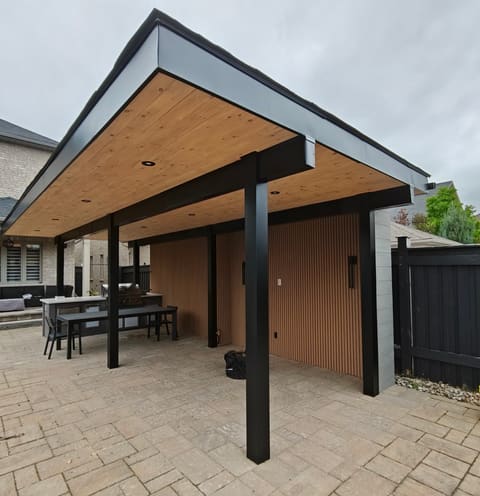
Minor Variances for Backyard Projects in Toronto: The Committee of Adjustment
Minor variance in Toronto explained for backyard projects: when the Committee of Adjustment gets involved, the four tests and the steps. Read the guide.
Guide
Deck Privacy Screen Ideas for Toronto Backyards
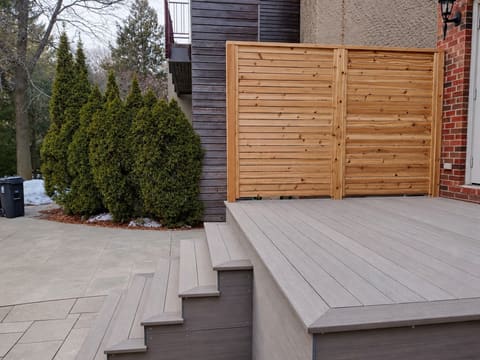
Deck privacy screen ideas for Toronto yards: slat walls, panels, planters and louvres, plus the height rules to check first. Plan yours with confidence.
See also our Decks service.