
Glass Railing vs Aluminum Railing for Decks
Glass railing vs aluminum for your deck: compare views, upkeep, privacy and cost drivers, and see what to ask before you choose. Decide with confidence.
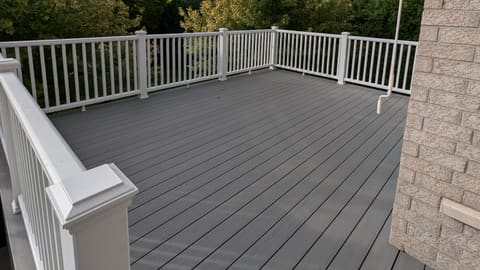
The glass railing vs aluminum question comes up often when planning a deck, because the railing is the part of the deck you look at most. It frames the view, sets the style of the whole space and, for many families, is the part that needs to be solid. Both options can be built well. They differ in what you see, what you clean and what they ask of the structure underneath.
This guide compares the two, explains where each makes sense and lists what to ask before you commit. If you are planning a new deck, see our decks service page for how we approach the whole build.
Glass railing vs aluminum: the short version
| Glass | Aluminum (pickets) | |
|---|---|---|
| View | Open and nearly uninterrupted | Lines of pickets; slim but visible |
| Wind and privacy | Blocks wind; offers some screening | Wind passes through; little screening |
| Cleaning | Regular glass cleaning shows water spots and fingerprints | Occasional wash; marks are less visible |
| Look | Modern, minimal | Clean and classic, many styles and colours |
| Installation | More precise; panels and posts or channels must be aligned | Straightforward and forgiving |
| Cost drivers | Higher: glass, hardware, fabrication | Lower on most decks |
| Best for | Views, pools, elevated decks, contemporary homes | Family decks, budget-conscious projects, most house styles |
The cost row describes general tendencies, not Mako prices. We cover cost drivers below.
Why people choose glass
Glass railings keep sight lines open. If the yard is the feature, whether that is a garden, a ravine edge, a pool or a skyline, glass keeps your eye on it instead of on a row of pickets. Frameless glass deck railing, where panels are held in a base channel or by discreet posts, takes this furthest: from a seat on the deck there is almost no railing to see.
Glass also blocks wind at seating height, which makes a deck usable for more of the season. It does this without closing the space in, the way a solid screen would. For a deck beside a pool, glass is also a common choice for pool-side visibility, although pool enclosures follow their own rules; see our guide to pool fence rules in Toronto.
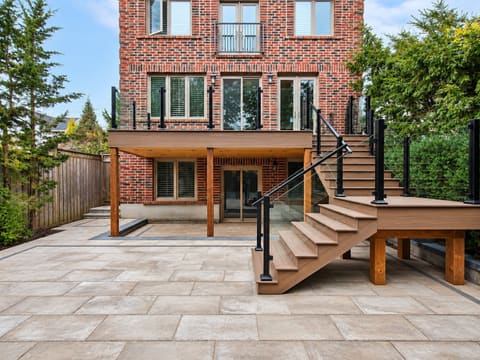
The trade-offs are practical:
- Cleaning. Glass shows fingerprints, pollen, salt and water spots. If the deck sits under trees or gets sprinklers, expect to wipe it down often.
- Cost. Glass and its hardware are generally the more expensive route, and fabrication is made to measure.
- Precision. Panels have to line up, so the framing, post spacing and deck edge need to be accurate from the start.
- Visibility. Some people find glass invisible to children, pets and birds. Frosted or tinted options, or visible top rails, can help.
Why people choose aluminum
Aluminum railing is the practical workhorse. It does not rot, rust through or need painting, and powder-coated finishes in black, charcoal and white suit most house styles. An aluminum picket railing gives a traditional look with the colour and detail you choose, and it is usually the simpler system to install and repair.
Pickets also give a kind of reassurance. You can see where the edge is, small children can see it too, and the spacing is easy to check. Wind passes through, which is good for airflow and bad for exposed, breezy decks.
The trade-offs:
- The view. Pickets break up the sight line, even when slim. On a deck with a great view, that matters.
- Finish care. A powder coat needs gentle cleaning, and chips should be touched up promptly.
- Style. Standard systems have a recognizable look. That can be exactly right, or too generic for a high-end design.
Are glass railings worth it?
It depends on what the deck is for. Glass is worth considering when:
- The view is the main reason for the deck.
- The deck is raised and the railing would otherwise dominate the elevation.
- The house is contemporary and the railing should disappear.
- The deck is exposed to wind and you want shelter without a solid screen.
- You are happy to clean it regularly.
Aluminum is often the better fit when:
- The deck is a family space and you want a low-fuss, low-maintenance railing.
- The budget needs to go further elsewhere, for example into better decking or lighting.
- The view is modest and a railing line will not take away from it.
- The house style is traditional or transitional.
A common approach is to mix the two: glass where the view is, aluminum along the sides where it is not, with the same post and top-rail colour tying them together.
We build both, in three forms: all-glass railings, all-aluminum railings, or aluminum-framed glass.
How railing choice affects the rest of the deck
The railing is attached to the deck, so it should be planned at the same time as the framing. A few things follow from that:
- Post and channel locations. Glass systems need accurate post spacing or a base channel along the edge, so the framing, blocking and fascia are set up for it.
- Deck edge and decking. How the railing meets the surface affects the decking layout and the finish at the edge. If you are still choosing a decking material, weigh composite vs cedar decking at the same stage.
- Stairs. Stair railings follow their own rules and are often where a design looks the most awkward. Plan them at the beginning, not at the end.
- Lighting. Post caps, rail lights and under-rail lighting are easier to run when the railing system is chosen early.
Code and permits
Railings on a deck are guards, and guards are regulated by the Ontario Building Code. The code sets requirements for height, the size of openings and whether a guard can be climbed, and those requirements apply to the system you choose, whether glass or aluminum. We do not repeat the numeric limits here because they depend on the deck and the dwelling, and they should be confirmed with your municipality's building department before you finalize a design. The City of Toronto's deck and porch application guide lists guard details, including openings and climbability, among the information required with a deck permit application.
On permits, the City of Toronto says a building permit is required to construct a deck more than 60 centimetres (24 inches) above ground, and that an uncovered deck at or below that height may be exempt if it is not part of a required exit and complies with the zoning by-law. This applies to the City of Toronto only, and other municipalities set their own rules. For the Toronto detail, read our guide to deck permits in Toronto. If the deck has stairs, confirm the stair and landing requirements with your municipality as well.
For glass specifically, ask what type of glass is used, whether it is rated for guard use and what the installation requirements are.
What changes the price
We do not publish per-foot or per-item prices. The things that move the cost of a railing, glass or aluminum, are:
- The total length of railing, and the number of corners and stairs.
- The system: glass and hardware versus aluminum posts and pickets.
- Glass thickness, type and fabrication, if you choose glass.
- Finish, colour and any custom detail.
- Post mounting and the work needed to the deck framing.
- Lighting, gates or integrated features.
At Mako, projects are planned around the budget bands on our quote form: Under $25k, $25–50k, $50–100k, $100–200k, $200k+ and Not sure yet / need guidance. A railing is usually one part of a deck project, and the choice between glass and aluminum is one of the levers that affects where the whole project lands.
Questions to ask before you choose a railing
- What are the guard height, opening size and climbability requirements for this deck, and how does the design meet them?
- What type of glass or aluminum system is it, and what does the manufacturer specify for installation?
- How are the posts or channel fixed to the deck structure?
- What finish is used, and how should it be cleaned and cared for?
- How are stairs, gates and corners handled?
- How will the railing handle wind, snow load and ice?
- What can be repaired or replaced if a section is damaged?
Frequently asked questions
Is glass railing more expensive than aluminum?
Generally, yes. Glass, hardware and made-to-measure fabrication usually cost more than a standard aluminum picket system. The size of the gap depends on length, corners, glass type and installation details. We do not publish per-foot prices, so ask for a quote that shows both options side by side for your deck.
Is glass railing hard to maintain?
It needs more frequent cleaning than aluminum because fingerprints, pollen and water spots show on glass. Cleaning is simple, with a glass cleaner and a soft cloth, but you will notice it. Aluminum typically needs only an occasional wash. Placement matters too, since a deck under trees or near sprinklers will mark more quickly.
Are glass railings safe?
Railings of either type must meet the Ontario Building Code requirements for guards, and glass used in a guard should be a type intended for that use. Ask the installer for the glass specification and the manufacturer's installation requirements, and confirm the details with your municipality's building department.
Can I combine glass and aluminum railing on one deck?
Yes. Many designs use glass along the side with the best view and aluminum elsewhere, matching posts and top rails in the same colour. The transition points need to be planned so the two systems meet cleanly and the guard requirements are met on every side.
Planning your deck railing
The best way to choose between glass and aluminum is to look at the deck, the view and the budget together. Contact Mako Construction to talk through railing options as part of your deck design.
Sources
- toronto.ca/services-payments/building-construction/building-permit/before-you-ap...
- toronto.ca/services-payments/building-construction/building-permit/before-you-ap...
This guide is general information, not legal or engineering advice. Rules and fees change; confirm requirements for your property with your municipality.

About the author
Stephan Tosevski
Stephan Tosevski leads Mako Construction. Mako Construction has built high-end outdoor living spaces across Toronto & the GTA since 2016 — decks, cabanas, pergolas, landscaping, pools, outdoor kitchens, and hot tub and swim spa installations. Fully insured, with permit-ready projects and professional site management from consultation to turnover.
Related guides
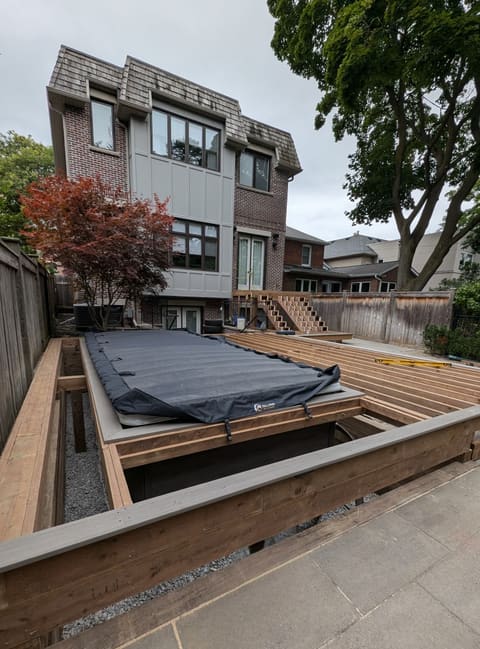
Guide
Best Time of Year to Build a Deck or Pool in Ontario
The best time of year to build a pool in Ontario: how winter planning, spring starts, fill rules and booking lead times shape your pool and deck schedule.
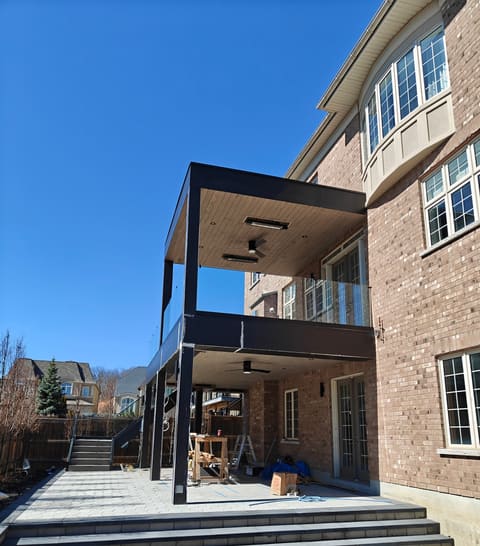
Guide
Multi-Level Deck Design for Sloped GTA Lots
Multi level deck design for sloped GTA lots: how to plan levels, steps, guards, footings and drainage so a tiered deck works with your yard. See the checklist.
Guide
Minor Variances for Backyard Projects in Toronto: The Committee of Adjustment
Minor variance in Toronto explained for backyard projects: when the Committee of Adjustment gets involved, the four tests and the steps. Read the guide.
Guide
Deck Privacy Screen Ideas for Toronto Backyards
Deck privacy screen ideas for Toronto yards: slat walls, panels, planters and louvres, plus the height rules to check first. Plan yours with confidence.
See also our Decks service.