
Aluminum vs Wood Pergolas: Look, Lifespan and Maintenance
Aluminum vs wood pergola for a Toronto yard: how each looks, ages, handles snow and needs upkeep, so you can choose the right material before you build.
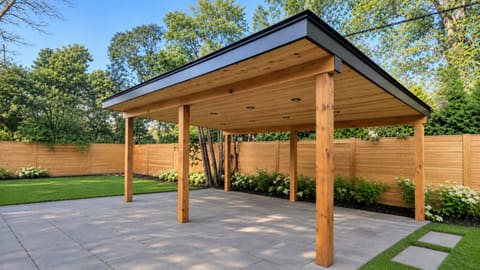
Choosing between an aluminum vs wood pergola is mostly a decision about how you want the structure to look in year one and how much attention you want to give it in year ten. Both materials work in a Toronto backyard. They behave differently through snow, sun and freeze-thaw cycles, and they suit different architecture.
This guide compares the two on appearance, durability, maintenance, structure and snow, and finishes with questions to ask any builder. If you are planning a full structure, our pergolas service page shows what we design and build.
Aluminum vs wood pergola: the short version
| Wood (such as cedar) | Aluminum | |
|---|---|---|
| Look | Warm, natural grain, traditional or craftsman | Clean lines, slim profiles, contemporary |
| Upkeep | Periodic stain or sealer, inspection of joints | Mostly washing; check the finish and fasteners |
| Rot and insects | Possible if moisture sits in joints | Not an issue |
| Design flexibility | Easy to cut, shape and customize on site | Limited to the system's profiles, colours and sizes |
| Heavy snow | Depends on member size and spacing | Depends on the system's rating and spacing |
| Fit with a house | Suits brick, stone, timber and heritage homes | Suits stucco, metal, glass and modern architecture |
None of this is a ranking. The right answer depends on the house, the site and your appetite for maintenance.
How wood and aluminum pergolas look
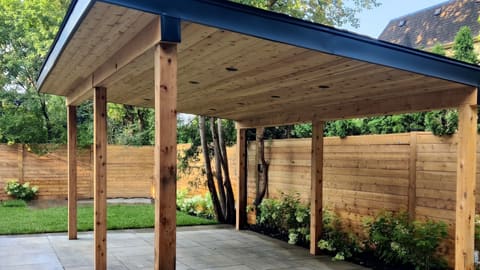
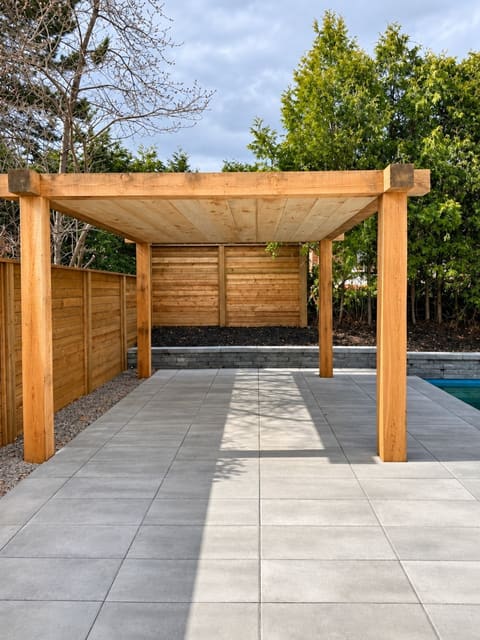
Wood is the traditional choice. Cedar, in particular, is popular in Ontario for its grain and colour, and it can be left to weather to a silver-grey or kept warm with a stain. Posts can be wrapped, beams can be notched or layered, and rafter tails can be shaped to echo the house. If you want a pergola that looks built for one specific property, wood gives the most room to design.
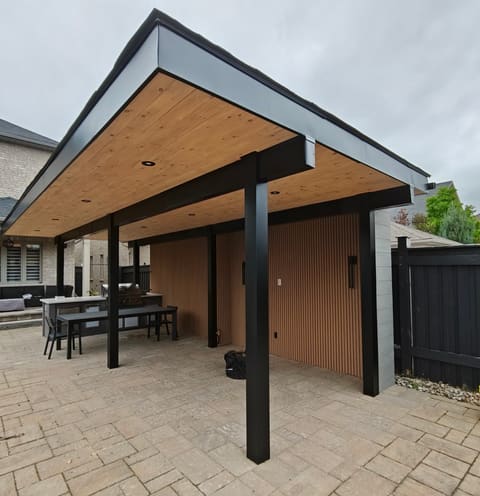
Aluminum reads as cleaner and more architectural. Profiles are slim, joints are hidden, and powder-coated finishes in black, charcoal or white sit well beside large windows, metal railings and modern cladding. The trade-off is that you work within the profiles and sizes a given system offers, so unusual shapes and dimensions are harder.
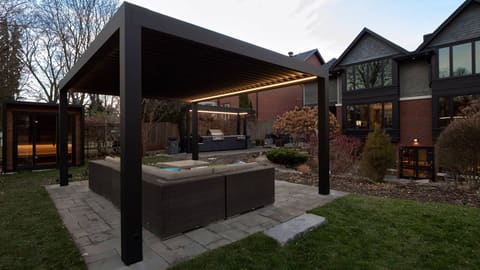
A useful test: stand where the pergola will go and look at the house. If the house is heavy on texture, such as brick, stone or timber, wood tends to feel at home. If it is smooth and minimal, aluminum often matches better.
Lifespan and durability
A pergola is outside year-round, so the material question is really about what the weather does to it.
Wood is a natural material. Properly detailed cedar is a sound choice outdoors, but end grain, joints and places where water can sit are the weak points. Good design keeps water moving off the structure: sloped tops, gaps at connections, and posts that do not sit in standing water. Wood will move and check as it dries and wets, and that is normal.
Aluminum does not rot, and insects have no interest in it. The finish is what you are maintaining. A quality powder coat holds colour well, but scratches, chips and harsh cleaning products can damage it. Fasteners and any steel hardware in the system also deserve a look over time.
We do not quote lifespans in years here, because those depend on product quality, exposure and care, and any number we gave would be a guess. For a specific product, read the manufacturer's own finish and structural guidance.
Maintenance: what you will actually do
Wood needs the more regular attention:
- Clean it once or twice a year to remove dirt and mildew.
- Re-apply stain or sealer on a schedule that suits the product and the sun exposure on that side of the yard.
- Check joints and the base of each post for moisture and movement.
- Replace or repair any member that has started to split or soften.
Aluminum is lighter work:
- Wash with mild soap and water.
- Look for chips in the finish and touch them up early.
- Check that fasteners and any moving parts, such as operable slats, are tight and working.
If you do not enjoy maintenance, or the pergola will be hard to reach, that favours aluminum. If you like the character a wood structure develops and are happy to look after it, wood is a fair trade.
Snow, wind and Toronto winters
Toronto pergolas deal with snow, ice, wind and repeated freezing and thawing. Two points matter more than the material name on the quote.
First, an open pergola, with a gap between rafters, sheds most snow through the structure. A pergola with a solid or near-solid roof, such as polycarbonate panels or closely spaced louvres, will hold snow, and the structure needs to be sized for that load.
Second, the ability to carry snow comes from the engineering: member sizes, spans, post footings and connections. A heavy wood beam and a properly rated aluminum system can both perform well, and a lightly built version of either can struggle. If you are choosing the best pergola for snow, ask what snow load the design has been built or rated for and how that was determined. For manufactured aluminum systems, ask for the manufacturer's published rating and installation requirements rather than a verbal assurance.
For wood pergolas, we build with pressure-treated spruce-pine-fir (SPF), Douglas fir or cedar. On our aluminum pergolas, the snow load the structure can carry depends on the tier of aluminum beam strength chosen. On our wood pergolas and cabanas, it depends on the joist dimensions and spans, which we work out at the planning stage.
Footings matter just as much as the pergola above them. Posts that are not set below frost depth can heave, and that shows up as racking and gaps in either material.
Cost: what changes the price
We do not publish per-item prices, and cost depends on the specific design. In general, the factors that move the price of a pergola are:
- Size and the number of posts.
- The material and system, including custom wood work versus a manufactured system.
- Roof type: open rafters, fixed panels or operable louvres.
- Footings, ground conditions and site access.
- Lighting, electrical, heaters or screens added to the structure.
- Whether the pergola is part of a larger project such as a deck, patio or outdoor kitchen.
At Mako, projects are planned around the budget bands on our quote form: Under $25k, $25–50k, $50–100k, $100–200k, $200k+ and Not sure yet / need guidance. A stand-alone pergola can land under or over $25k depending on its size, finish and material, and it is quoted once the design is clear.
Permits and rules
Whether a pergola needs a building permit depends on its size, whether it is attached to the house and whether it has a roof, plus the zoning rules for your lot. According to the City of Toronto's "When Do I Need a Building Permit?" page, a building permit is required for an accessory structure larger than 10 square metres (107 square feet), and for any accessory structure that is attached to an existing building or has plumbing, regardless of its size. The page also says that even where no permit is required, compliance with the zoning by-law is. These rules apply to the City of Toronto only, and other municipalities set their own, so check with the municipality where you live. We cover the Toronto details in our guide to pergola permits in Toronto.
The choice of material does not change whether a permit applies, but it can change the drawings, since an engineered aluminum system and a custom wood frame are documented differently.
Which material suits which yard
Wood tends to be the better fit when:
- The house is traditional, heritage or heavily textured.
- You want a custom shape, dimension or detail.
- You enjoy the character of natural material and are happy to maintain it.
Aluminum tends to be the better fit when:
- The house is contemporary, with clean lines and large glazing.
- You want low maintenance.
- You want a slim profile, or a roof system that opens and closes.
If you are still deciding between a pergola and a roofed structure, read pergola vs cabana vs covered patio first, since the roof type changes the structure far more than the material does. A pergola that connects to a deck should also be planned with it; see our decks page.
Questions to ask any pergola builder
- What is the structure made of, and what are the post, beam and rafter sizes?
- What snow load is it designed or rated for, and how do you know?
- How deep are the footings, and how are they sized for our soil?
- How is the finish protected, and what does the manufacturer say about care?
- What does maintenance look like in year one, five and ten?
- How is water directed off the structure and away from the posts?
- If it is attached to the house, how is it flashed and supported?
Frequently asked questions
Is an aluminum or wood pergola better for snow?
Neither material wins on its own. Snow performance comes from the design: member sizes, spans, footings and whether the roof is open or solid. An open pergola sheds snow, while a solid roof holds it. Ask any builder for the design snow load and the basis for it, and for a manufactured system, the manufacturer's published rating.
Does a cedar pergola need more maintenance than aluminum?
Generally yes. Cedar needs periodic cleaning, stain or sealer, and a check of joints and post bases. Aluminum mostly needs washing and an occasional look at the finish and fasteners. How much work wood needs depends on the finish you choose and how much sun and moisture that part of the yard gets.
Can I mix wood and aluminum in one pergola?
Yes, and it is common. Some designs use wood posts or beams with an aluminum roof system, or aluminum posts with wood accents. The key is that the connections are designed together so the different materials move and carry load properly. Ask your builder how the two are joined.
Does the material change whether I need a permit?
Not on its own. The City of Toronto's permit page ties permit requirements to things such as the size of an accessory structure and whether it is attached to a building. Zoning rules apply either way. Check with the municipality where you live, since each sets its own rules.
Planning a pergola
If you are weighing wood against aluminum, the most useful step is looking at the house and the yard together. Contact Mako Construction to talk through the options for your property and see how a pergola could fit into the wider backyard design.
Sources
This guide is general information, not legal or engineering advice. Rules and fees change; confirm requirements for your property with your municipality.

About the author
Stephan Tosevski
Stephan Tosevski leads Mako Construction. Mako Construction has built high-end outdoor living spaces across Toronto & the GTA since 2016 — decks, cabanas, pergolas, landscaping, pools, outdoor kitchens, and hot tub and swim spa installations. Fully insured, with permit-ready projects and professional site management from consultation to turnover.
Related guides
Guide
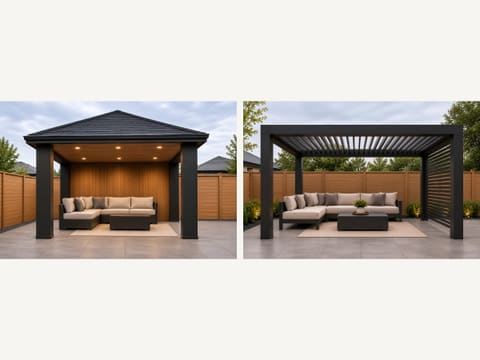
Gazebo vs Pergola: Shade, Shelter and Style
Gazebo vs pergola: compare shade, rain cover, permits and upkeep for a Toronto backyard, so you can pick the structure that suits how you live. Read more.
Guide
Minor Variances for Backyard Projects in Toronto: The Committee of Adjustment
Minor variance in Toronto explained for backyard projects: when the Committee of Adjustment gets involved, the four tests and the steps. Read the guide.
Guide
Pergola Ideas for Toronto Backyards: Styles, Layouts and Materials
Pergola ideas for Toronto backyards: modern styles, layouts over a patio or deck, and materials that handle our winters. See what suits your yard.
Guide
Backyard Design Trends for 2027: Designing the Full Outdoor Room
Backyard design trends for 2027 in the GTA: how kitchens, covered lounges, fire, lighting and planting combine into one outdoor room. See what to plan.
See also our Pergolas & Covered Patios service.