
Pergola vs Cabana vs Covered Patio: Which Fits Your Backyard?
Pergolas, cabanas and covered patios compared: shade, rain protection, permits, cost drivers and how each works in a Toronto backyard.
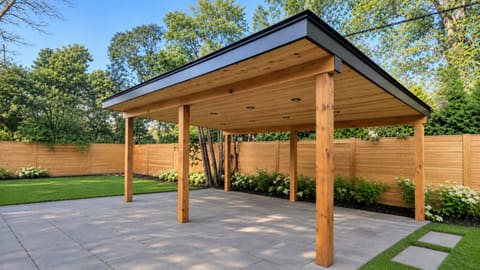
Most backyard plans reach the same question: what goes over the seating area? A pergola, a cabana and a covered patio can all frame an outdoor room, and they behave very differently in a Toronto summer storm, in approvals and in budget. Here is how to choose.
The quick comparison
| Pergola | Covered patio | Cabana | |
|---|---|---|---|
| What it is | Open-roofed frame of beams and rafters | Solid roof over a patio or deck, open sides | Roofed structure with one or more walls, often a pool house |
| Shade | Partial (full with louvres or a cover) | Full | Full |
| Rain protection | Little, unless louvred or covered | Yes | Yes |
| Storage / changing / washroom | No | No | Yes, if designed for it |
| Attached to house? | Either | Often | Usually detached |
| Feel | Light, architectural | Extension of the house | A destination in the yard |
| Relative cost | Lowest of the three, for comparable size and materials | Middle | Highest |
Pergolas: structure and light
A pergola defines a space without closing it. Rafter spacing controls the shade pattern, and the frame becomes a place for integrated lighting, heaters, a ceiling fan on a covered section, or climbing plants. In wood, stained or natural cedar and other timbers give warmth — our featured walnut-stained pergola with recessed lighting is an example of how a frame can anchor an outdoor kitchen. Modern aluminum systems with adjustable louvred roofs let you open the roof for sun and close it for rain.
Best for: dining areas, outdoor kitchens that need definition, and yards where you want sky. Watch for: an open pergola does not keep rain off furniture; a louvred system or retractable canopy does.
Covered patios: a room off the house
A covered patio has a solid roof — often tied into the house — over a patio or deck. It keeps furniture dry, makes the space usable in light rain and extends the shoulder seasons with heaters. Because it often connects to the house, the roof has to be detailed carefully where it meets the existing wall and roofline, including flashing and snow load.
Best for: space right outside the kitchen doors, outdoor living rooms with TVs and soft seating. Watch for: roofing over windows can darken the interior; check how much light the rooms behind it will lose.
Cabanas: a building in the yard
A cabana adds walls, storage and often plumbing. Next to a pool it is where towels, a washroom, a bar or a change room live. It is also a building, which brings the most rules: in Toronto, accessory structures larger than 10 m² — the City names pool houses and cabanas — need a building permit, and any size needs one if it is attached or has plumbing (City of Toronto). Zoning limits height and coverage. Our cabana permit guide covers the details.
Best for: pool yards, large lots, and anyone who wants a self-contained outdoor space.
Permits: how they differ
- Cabana: permit thresholds above apply; zoning (4.0 m height, 10% ancillary coverage under Toronto's Zoning By-law 569-2013) shapes size.
- Covered patio attached to the house: in Toronto, the City lists additions such as porches and decks, and enclosing an existing deck or patio of any size, as needing a permit. A roof structure tied into the house is typically treated as part of the building.
- Pergola: open-roofed pergolas are often treated differently from roofed structures, but height, size, attachment to the house and zoning setbacks all matter. Confirm with your municipality before you build.
Zoning applies to all three even where no building permit is required, and rules vary across Toronto, Vaughan, Markham and Richmond Hill. We confirm the zoning and permit picture for each address before a design is finalized.
How to decide
- What weather do you want to beat? Sun only: pergola. Rain too: covered patio or louvred pergola. Full shelter with storage: cabana.
- Where is it? Off the kitchen: covered patio or attached pergola. By the pool: cabana or freestanding pergola.
- What needs to live there? A washroom, bar fridge, or storage means a cabana.
- How much light do the rooms behind it need? Solid roofs over windows change the house.
- What does the lot allow? Coverage and height limits sometimes make the decision for you.
Combining them
Many of the best yards use more than one: a covered patio off the house for everyday use, a pergola over the outdoor kitchen, and a cabana by the pool. Designing them together keeps materials, rooflines and lighting consistent instead of looking added over the years.
Materials and finishes
Wood. Cedar and other quality timbers give pergolas and cabanas warmth. Exposed beams with clean joinery, a consistent stain and hidden hardware are what make a timber structure look high-end. Our featured project uses a walnut-stained pergola with recessed lighting for exactly that warmth. Wood needs periodic refinishing to keep its colour.
Aluminum. Powder-coated aluminum frames are slim, strong and low-maintenance, and they are the usual base for louvred roof systems. Colour and profile choices decide whether they look architectural or off-the-shelf.
Steel. Steel allows long spans and very thin profiles for modern designs, and needs proper coating to resist corrosion.
Roofing for covered patios and cabanas. Options include shingles or metal to match the house, flat-roof membranes for modern lines, and tongue-and-groove ceilings underneath for a finished look.
Lighting, heat and comfort
Whichever structure you choose, plan the electrical before the roof goes on. Recessed or strip lighting in beams, dimmable fixtures over dining, heaters for shoulder seasons, ceiling fans under solid roofs, and outlets for speakers or a TV all need wiring hidden in the frame. Retrofitting wiring into a finished timber structure is difficult and rarely looks as clean.
Snow and structure
A solid roof in Toronto has to carry snow. A covered patio or cabana roof is designed for snow load like any building; a louvred pergola has manufacturer guidance on winter operation and loads. If you think you might add a roof to a pergola later, size the posts, beams and footings for it now.
Mistakes to avoid
- Undersizing the structure for the furniture underneath; measure the dining table and walkways first.
- Blocking views or daylight from the main rooms of the house.
- Choosing a structure before deciding where the outdoor kitchen, pool enclosure and paths go.
- Forgetting drainage from a solid roof — gutters and downspouts need somewhere to go.
Frequently asked questions
Is a pergola or covered patio better in Toronto? If you want to use the space in the rain or keep furniture dry, a covered patio or a louvred pergola. If you want light and an open feel, a classic pergola.
Does a pergola need a permit in Toronto? It depends on size, height, attachment and design, and zoning always applies. Confirm with Toronto Building for your plans.
Can a pergola be converted to a covered patio later? Sometimes, but a roof adds load and snow load; the posts, beams and footings need to be designed for it from the start.
What is the difference between a cabana and a gazebo? A gazebo is typically an open, roofed, freestanding pavilion. A cabana usually has walls and functions as a pool house or storage space.
Planning shade for your yard?
See our pergolas and cabanas pages, or request a quote.
Sources
- toronto.ca/services-payments/building-construction/building-permit/before-you-ap...
- toronto.ca/zoning/bylaw_amendments/ZBL_NewProvision_Chapter10_5.htm
This guide is general information, not legal or engineering advice. Rules and fees change; confirm requirements for your property with your municipality.

About the author
Stephan Tosevski
Stephan Tosevski leads Mako Construction. Mako Construction has built high-end outdoor living spaces across Toronto & the GTA since 2016 — decks, cabanas, pergolas, landscaping, pools, outdoor kitchens, and hot tub and swim spa installations. Fully insured, with permit-ready projects and professional site management from consultation to turnover.
Related guides
Guide
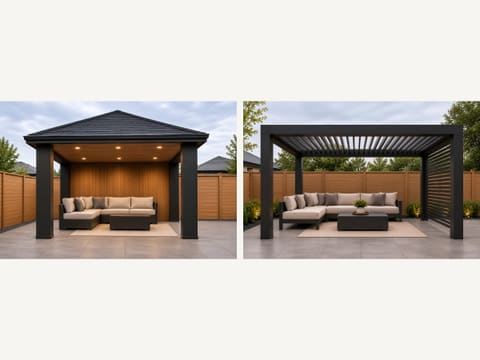
Gazebo vs Pergola: Shade, Shelter and Style
Gazebo vs pergola: compare shade, rain cover, permits and upkeep for a Toronto backyard, so you can pick the structure that suits how you live. Read more.
Guide
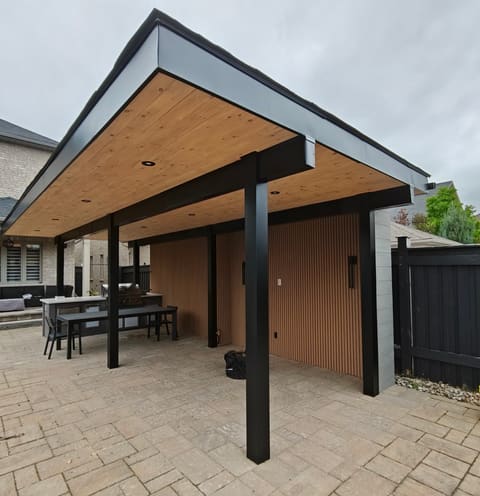
Minor Variances for Backyard Projects in Toronto: The Committee of Adjustment
Minor variance in Toronto explained for backyard projects: when the Committee of Adjustment gets involved, the four tests and the steps. Read the guide.
Guide
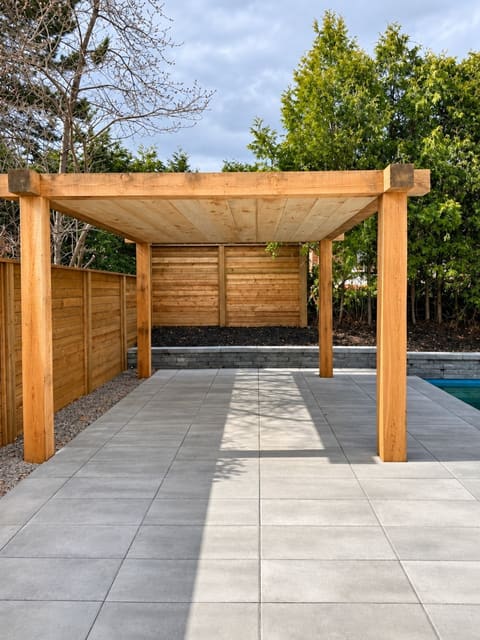
Pergola Ideas for Toronto Backyards: Styles, Layouts and Materials
Pergola ideas for Toronto backyards: modern styles, layouts over a patio or deck, and materials that handle our winters. See what suits your yard.
Guide
Aluminum vs Wood Pergolas: Look, Lifespan and Maintenance
Aluminum vs wood pergola for a Toronto yard: how each looks, ages, handles snow and needs upkeep, so you can choose the right material before you build.
See also our Pergolas & Covered Patios service.