
Pool Coping Options and Pool Deck Materials Compared
Compare pool coping options and pool deck materials, from stone to porcelain, for Ontario winters. See what to weigh before you choose.
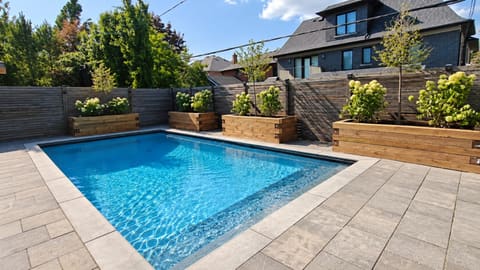
The edge of a pool and the surface around it are where a backyard is seen and touched most. Choosing between pool coping options and pool deck materials affects how the pool looks, how it feels underfoot in July, and how it copes with an Ontario winter. This guide compares the main choices in plain terms, so you can talk to your builder with a clear idea of what matters.
Our pool design and construction service treats the pool, the coping and the surrounding deck as one design. Coping and decking are chosen together, because the edge detail sets the height, drainage and look of everything around it.
What pool coping does
Coping is the finished cap along the top edge of the pool wall. It does several jobs at once:
- It gives a clean, comfortable edge to sit on, grip and step over.
- It overhangs the pool wall, so water and debris are directed away from the joint between pool and deck.
- It transitions the pool structure into the surrounding deck.
- It sets the visual line of the pool, which is often the first thing the eye follows.
The coping is usually set on a structural edge, and the details differ by pool type. Mako recommends fiberglass pools for most Toronto backyards, and the coping and surrounding surface for any pool are planned with our licensed pool partners. Your builder should explain how the edge is supported before you choose a material.
Pool coping options
There is no single best choice. Each option trades off look, feel, upkeep and how it handles freeze and thaw.
Natural pool coping stone
Pool coping stone, such as limestone, granite or other cut natural stone, is valued for its character. No two pieces are identical, so the edge has a hand-selected look that suits traditional and contemporary designs alike. Stones differ widely in density, porosity and surface finish, so ask the supplier how a specific stone performs around pool water and in freezing conditions, and whether it needs sealing. Some stones can feel warm or rough underfoot depending on finish, so handle a sample.
Porcelain pool coping
Porcelain pool coping has become popular for its clean lines, consistent colour and wide range of finishes, including stone and concrete looks. Porcelain is a manufactured product, so the pieces are uniform, which suits a modern, minimal pool. As with any material, confirm with the manufacturer that the specific product is rated for exterior use, for pool areas and for freezing conditions, and ask about slip resistance and the recommended installation method. Porcelain edge pieces and large-format slabs can also be matched, giving a continuous look from water's edge to deck.
Precast and cast concrete coping
Concrete coping is produced as pre-formed pieces or poured in place. It offers a range of profiles and colours at a more modest visual weight than natural stone. Pre-formed pieces give a regular edge, and poured-in-place work can follow curves. Ask about the finish, the sealer if one is used, and how joints are handled, since the edge sees the most water and the most movement.
Pavers and bullnose pieces used as coping
Many pool and patio paver lines include bullnose or edge pieces designed for pool use. These make it easy to match the coping to the pool deck and are a common choice when the surrounding surface is also paver. Our guide to large-format pavers vs interlock covers the paver side.
Brick and other options
Brick-style coping and other cut materials exist, but they are less common in newer pool designs. If you are drawn to one, ask your builder how it handles water, edge wear and winter.
Pool deck materials
Coping is only the edge. The pool deck around it is a larger surface and a larger decision. The main pool deck materials are below.
Interlocking pavers and large-format pavers
Pavers are a popular pool surround. They are installed on a prepared base, so individual pieces can be lifted and relaid if the ground moves or a utility needs access. They come in many sizes and colours, and textured finishes can improve grip. Base preparation and drainage matter as much as the paver itself.
Porcelain pavers and slabs
Porcelain slabs and pavers give a refined, consistent look and pair naturally with porcelain coping. They are usually specified with an outdoor, slip-resistant finish. Installation systems vary, so follow the manufacturer's instructions and ask your builder which system suits your site.
Natural stone
Natural stone, such as flagstone, limestone or granite, gives a premium, organic look. Each stone varies in how it handles moisture, heat and salt, so ask for the supplier's technical information, and sealing and maintenance recommendations.
Poured concrete
Poured concrete is a durable, continuous surface that can be finished with a broom texture, exposed aggregate or a stamped pattern. It needs control joints placed to manage cracking, a good base, and proper drainage. Colour and finish choices affect how hot the surface becomes and how it looks over time.
Wood, composite and PVC decking
A deck beside a pool suits yards where the pool sits near the house or on a grade change. Wood, composite and PVC decking each have their own specifications for slip resistance, heat, fading and care, so check those directly with the manufacturer for a pool setting. For the wider deck decision, see our guide to composite vs cedar decking.
A quick comparison
| Material | Look | Main thing to check |
|---|---|---|
| Natural stone | Individual, premium | Porosity, finish, sealing, performance in freezing conditions |
| Porcelain | Clean, uniform, modern | Exterior and pool rating, slip resistance, installation method |
| Concrete (precast or poured) | Versatile, understated | Finish, joints, sealer, cracking control |
| Pavers | Wide range, easy to repair | Base preparation, joint sand and drainage |
| Composite or PVC decking | Warm, board-based | Manufacturer's guidance on heat, grip and care |
What to weigh before you choose
Slip resistance. A surface around a pool is walked on wet and barefoot. Ask for the manufacturer's data on slip resistance, and test a wet sample if you can.
Heat underfoot. Dark and dense surfaces can warm up in direct sun. Lighter colours and some shade from a pergola or umbrella help, and a sample left in the sun for an afternoon tells you more than a brochure.
Freeze and thaw. Toronto-area winters mean surfaces and joints face repeated freezing and thawing. A material that absorbs a lot of water is more at risk, and so is any surface laid over a poorly prepared base. Ask the supplier about frost performance, not only appearance.
De-icing products and pool chemistry. Salt and some de-icers can mark certain stones and concrete, and pool water treatment can affect finishes over time. Follow the manufacturer's guidance for cleaning and de-icing, and ask whether the surface should be sealed.
Drainage. Water should leave the pool area, not collect beside it or run toward the house. This is a grading question as much as a material one, and ties into broader backyard drainage in Toronto.
Colour and light. Coping sets the outline. A contrast with the deck can sharpen the pool's shape, and a match can make the space feel larger. Look at samples in your own yard light.
Maintenance. Some materials need periodic sealing or cleaning, and others are largely rinse-and-go. Decide how much upkeep you want before you choose a look.
Access and installation. The base, the edge support and the machinery needed all differ by material. Confirm access for delivery and lifting early, especially if a pool shell and heavy slabs both need to reach the yard.
Safety, rules and coordination
Pool rules in Ontario are set at the municipal level, and the enclosure, permit and inspection requirements differ by city. For Toronto, see our article on the pool fence by-law, and check your own municipality's pages if you live elsewhere. Your coping and deck choices should be confirmed against those requirements, and against the zoning rules for your lot.
Electrical bonding and lighting around a pool are specialist work. Mako doesn't personally hold pool, gas or electrical licences; that work is done by our licensed partner subcontractors.
How coping and decking fit into the budget
Coping and deck materials are one set of choices within the whole pool project. For Mako projects, pricing is set during estimating; the only figures we publish are the full-project budget bands on our consultation form: Under $25k, $25–50k, $50–100k, $100–200k, $200k+, and Not sure yet / need guidance. These are bands for the whole project, not for coping or decking. Material choice, deck area, base preparation, drainage, access and finishes all move the total, and our inground pool cost guide explains the wider cost drivers. For a look at pool types themselves, see fiberglass vs concrete vs vinyl pools.
Mako primarily uses Rinox and Permacon for coping stone.
Questions to ask your builder
- How is the coping supported and finished on the pool type we are considering?
- What do you recommend for the deck, and why does it suit this yard?
- Can I see and test full-size samples, wet and in my own light?
- How are drainage and the freeze-and-thaw base handled?
- What sealing or cleaning does each material need?
Frequently asked questions
What are the most common pool coping options?
The common choices are natural pool coping stone, porcelain, precast or poured concrete, and paver-based bullnose pieces. Each differs in look, feel and upkeep. The right one depends on your pool design, your deck material, your climate and how much maintenance you want to take on.
Is porcelain pool coping a good choice in Ontario?
It can be, when the specific product is rated by its manufacturer for exterior and pool use in freezing conditions and installed using the recommended system. Ask for slip-resistance information and installation guidance. Quality varies between products, so check the technical data rather than relying on the look alone.
Should the pool deck match the coping?
Not necessarily. A matching deck gives a seamless, larger-feeling space, while a contrasting coping defines the pool's outline. Either can look good. Choose by comparing full-size samples together in your yard's natural light.
Which pool deck material stays coolest?
It varies by colour, density and finish, so there is no universal answer. Lighter colours and shade help. Ask manufacturers for guidance on heat in direct sun, and test a sample outdoors on a sunny afternoon before you commit.
Plan the edge and the deck together
The best pool surrounds are designed as one space: coping, deck, drainage and shade chosen together. Contact Mako Construction to talk through your yard, your budget band and the materials that suit the way you want to use your pool.
This article is general information, current as of November 21, 2026. Products, rules and requirements change, and every property is different; confirm specifications with the manufacturer and requirements with your municipality before you build.

About the author
Stephan Tosevski
Stephan Tosevski leads Mako Construction. Mako Construction has built high-end outdoor living spaces across Toronto & the GTA since 2016 — decks, cabanas, pergolas, landscaping, pools, outdoor kitchens, and hot tub and swim spa installations. Fully insured, with permit-ready projects and professional site management from consultation to turnover.
Related guides
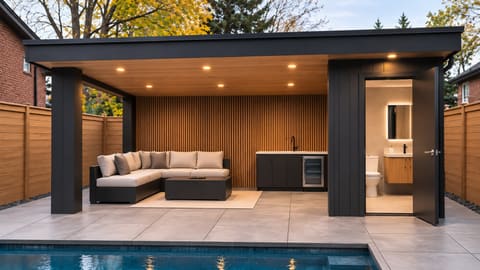
Guide
Pool House With a Bathroom: Plumbing, Permits and Layout
Planning a pool house with a bathroom in Toronto? See how plumbing triggers a permit, what zoning allows, and how to lay out the washroom. Read first.
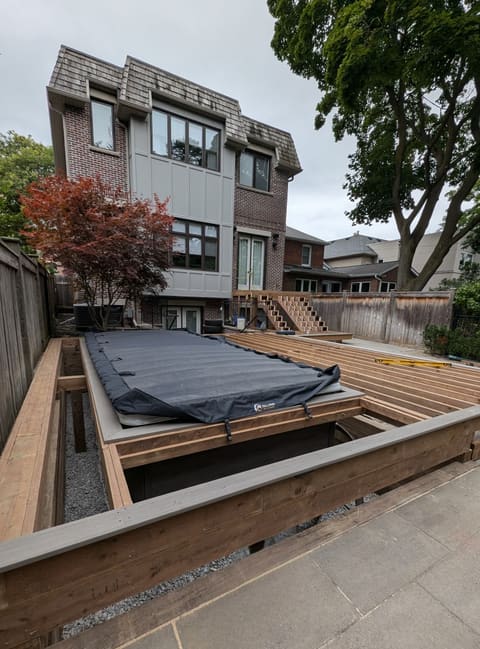
Guide
Best Time of Year to Build a Deck or Pool in Ontario
The best time of year to build a pool in Ontario: how winter planning, spring starts, fill rules and booking lead times shape your pool and deck schedule.
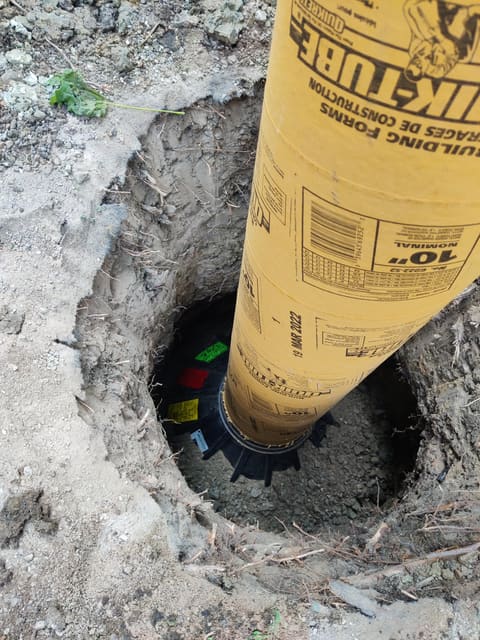
Guide
Call Before You Dig in Ontario: Locates for Backyard Projects
Call before you dig in Ontario: how Ontario One Call (Ontario Dig Authority) locates work, what private lines they miss, and how to plan. Read the guide.
Guide
Cabana Ideas for Pools: Layouts for Changing, Storage, Bar and Lounge
Cabana ideas for pools: layouts for changing, storage, a bar and a lounge, plus the planning points that shape a modern pool cabana design.
See also our Pools service.