
Building Near a Protected Tree in Toronto: What Changed in September 2026
Building near a protected tree in Toronto? See which trees need a permit, how protection zones work and what changed on Sept. 1, 2026 before you plan.
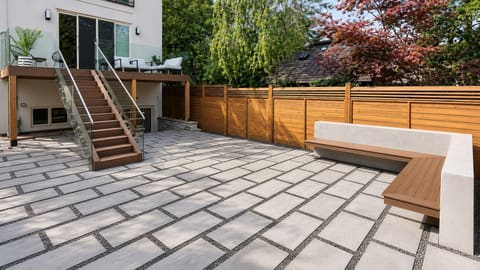
A mature tree is often the best thing about a Toronto backyard. It is also the thing most likely to change where a deck, patio, pool or cabana can go. If you are planning building near a protected tree in Toronto, the rules about which trees are protected, how much ground around them must stay untouched and when a permit is needed changed in part on September 1, 2026.
This guide sets out what the City of Toronto publishes, so you can plan a landscaping and hardscaping project with realistic expectations. It reflects the City's pages as read on November 17, 2026, is not legal advice, and the City decides each case.
Which trees are protected in Toronto?
According to the City's "When to Apply for a Tree or Ravine Permit" page, protection depends on where the tree stands and how big it is.
- Private property: any activity that can injure or remove a tree with a diameter of 30 cm (12 in) or more is prohibited unless a permit authorizes it. Trees smaller than 30 cm are not covered by the private tree by-law.
- City streets: street trees of any size are protected. That can include the boulevard and, in some cases, a strip of a front yard next to the road or sidewalk. A survey shows the distance to the curb, and 311 can confirm who owns a tree.
- Ravines and natural features: inside areas mapped under the Ravine and Natural Feature Protection By-law, trees of any size are protected.
The City measures diameter at breast height (DBH): wrap a tape around the trunk 1.4 m (4.5 ft) above ground and divide the circumference by 3.14. For a multi-stem tree the largest stem counts, and if one stem is 30 cm or more the whole tree is protected. A boundary tree, with any part of the trunk crossing a property line, belongs to both owners, and the City requires the other owners' consent.
What changed on September 1, 2026
The City's Tree Bylaw Review page lists the updates. The ones that matter most to a homeowner planning outdoor work are below.
A new "Distinctive Tree" category. A distinctive tree is a healthy tree, not designated as a heritage tree, with at least one stem more than 61 cm (24 in) in diameter. According to the City, distinctive trees are identified by City staff and must be considered through the tree permit when an application is made to injure or remove them.
Newly planted trees. Trees planted through enforcement actions or development approvals now need a permit for injury or destruction regardless of size. Separately, the City's application page says trees planted as a condition of a tree permit are protected from the day they are planted, whatever their size.
Replacement planting for violations. Replacement ratios for contraventions move to a system based on diameter, starting at 5:1 and rising for larger trees.
Ravine permit application fees. The City introduced fees for ravine and natural feature permits. As published in November 2026, they are:
| Application | Fee |
|---|---|
| Ravine tree, non-construction | $87.57 per tree |
| Ravine boundary or neighbour tree, non-construction | $183.03 per tree |
| Ravine tree, construction | $262.72 per tree |
| Ravine boundary or neighbour tree, construction | $549.08 per tree |
| Alteration of grade, no trees | $632.51 per application |
The fees are non-refundable, exemptions may be available for voluntary stewardship and certain eligible projects, and the amounts are updated annually. Council has also endorsed lowering the private tree threshold from 30 cm to 20 cm, but only pending a 2027 report, so 30 cm applies today.
Building near a protected tree in Toronto: how close is too close?
A tree protection zone (TPZ) is the area around a tree that must be protected during construction. The City publishes minimum sizes based on trunk diameter. These are some of the rows for a private tree and for a tree in a ravine or natural area:
| Trunk diameter (DBH) | Private property | Ravine or natural area |
|---|---|---|
| 30 to 40 cm | 2.4 m (8 ft) | 4.8 m (16 ft)* |
| 41 to 50 cm | 3.0 m (10 ft) | 6.0 m (20 ft)* |
| 51 to 60 cm | 3.6 m (12 ft) | 7.2 m (24 ft)* |
| 61 to 70 cm | 4.2 m (14 ft) | 8.4 m (28 ft)* |
* Or the dripline, the area under the outermost branch tips, whichever is greater. The City's full table covers smaller and larger trees and trees on City streets.
A 45 cm maple on a private lot has a protected zone of at least 3.0 m from the trunk, which can cover much of a narrow Toronto yard. The City also treats access routes and material storage inside the zone as work that needs a permit.
What counts as injuring a tree
The City's list is longer than most homeowners expect. It includes building or changing decks, patios, pools, retaining walls and sheds; digging, trenching or changing the soil level; installing large boulders; storing materials or soil; discharging concrete sluice or pool water; driving equipment over roots; and cutting or exposing roots.
For a backyard project, that means excavation for footings, a utility trench, a machine crossing the lawn or a stack of pavers under the canopy can all be an issue, not just the structure.
When a permit is needed, and when it is not
The City's guidance is direct. If any construction work on site, including access or storage, will affect a tree protection zone, a permit to injure or remove the tree is needed. If the work will not affect the zone, no permit is needed, but the City still requires you to protect the nearby trees and to complete a Tree Protection Plan in consultation with an arborist. The City recommends consulting an arborist to assess the site and measure the zone.
Why a pool, cabana or landscape feature gets more scrutiny
The City describes "as-of-right" construction as work that follows the Ontario Building Code, zoning and other applicable law. Even then, if the work affects a protected tree, a permit to injure or remove the tree is still required, and you may be asked to change the design. The City does not treat pools, landscape features and accessory structures, such as sheds, gazebos and cabanas, as as-of-right construction. That is a good reason to settle the tree question before you settle the layout of a pool or cabana. Our North York trees and ravines overview covers related ground.
Ravine lots
On a property inside a mapped ravine or natural feature area, the City prohibits more than tree work. Unless a permit authorizes it, you may not:
- harm or remove a tree of any size;
- change the natural topography by excavating, or by adding soil or other material on slopes;
- place or dump fill or refuse;
- construct new structures or replace old ones, including retaining walls.
You can check an address on the City's Ravine and Natural Feature Protection By-law map. Where the Toronto and Region Conservation Authority (TRCA) regulates the land, the City says it may require evidence of a TRCA permit before it will deal with grade changes. For slope and wall questions, see our retaining walls guide for the GTA.
Situations that do not need a permit
According to the City, a permit is not required to prune a tree to good arboricultural practice or to remove a tree that is 100 per cent dead. For an imminently hazardous or terminally diseased tree, you must request and receive a permit exception confirmation from the City first.
How the application works
The City says applications must be made through its online form or in person, not by email. A construction-related application includes an arborist report, a landscape and replanting plan, photos, and scale site plans showing every tree of 30 cm or more on the property and within 6 m on adjacent properties, with protection zones plotted. Approved removal permits carry conditions, including replacement planting, and the City may accept cash-in-lieu where there is no room to replant. A refusal can be appealed to Community Council, whose decision is final. Submitting an application does not guarantee a permit.
Designing around a tree instead of through it
The simplest route is a layout that respects the root zone from the start. Shifting a deck or cabana a few metres may take it out of the protection zone. Decide early where machines will travel and where materials will sit, and keep deep excavation away from the trunk. Redirected water can also harm a tree or flow over a slope, which the City lists as injurious, so see backyard drainage for Toronto clay soil.
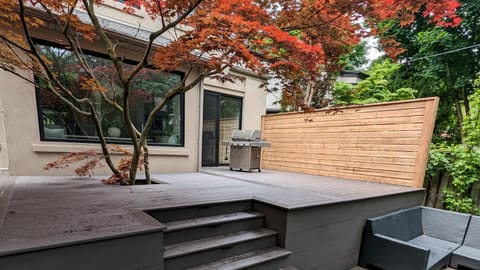
When one of our builds sits near a protected tree, we bring in an arborist and plan the layout, machine access and material storage around the tree's protection zone before work starts.
Questions to ask before you sign
Ask any builder you are considering how the footprint sits relative to the protection zone, where machines and materials will go, who arranges the arborist's assessment and hoarding, and how the quote treats tree-related work so it is not an unpriced extra. Full-project budgets for our builds sit in the bands on our quote form — Under $25k, $25–50k, $50–100k, $100–200k, $200k+, and Not sure yet / need guidance — and tree work should be named in the scope.
Frequently asked questions
Do I need a permit to build a deck near a tree in Toronto?
It depends on the tree and the work. On private property, the City protects trees with a diameter of 30 cm or more. If construction, access or storage will affect the tree's protection zone, a permit to injure or remove the tree is needed. If it will not, no permit is needed, but you must still protect the tree and complete a Tree Protection Plan with an arborist.
Are trees smaller than 30 cm protected in Toronto?
On ordinary private property, trees under 30 cm are not covered by the private tree by-law. Street trees of any size are protected, as are trees of any size inside a ravine or natural feature protection area. Council has endorsed a 20 cm threshold in principle, but it awaits a 2027 report and is not in effect.
What is a distinctive tree?
Since September 1, 2026, a distinctive tree is a healthy tree, not designated as a heritage tree, with at least one stem larger than 61 cm in diameter. City staff identify these trees, and the City says they must be considered through the tree permit when someone applies to injure or remove one.
How much does a Toronto ravine permit cost?
As published in November 2026, the City's ravine and natural feature application fees run from $87.57 per tree for a non-construction ravine tree to $549.08 per tree for a construction application involving a boundary or neighbour tree, and $632.51 for an alteration of grade with no trees. Fees are non-refundable, may have exemptions and are updated annually.
Can I remove a protected tree because it is inconvenient?
The City generally does not accept nuisance reasons, such as leaves, fruit or roots, as grounds to remove a protected tree. Removal of a protected tree needs a permit, and a permit is not granted for convenience alone. Apply to the City before any cutting, and talk to an arborist about alternatives such as pruning to good practice.
If you are planning an outdoor build around a mature tree and want the layout to work with it, contact Mako Construction to talk through your yard, your goals and a realistic scope.
Sources
- toronto.ca/services-payments/building-construction/tree-ravine-protection-permit...
- toronto.ca/services-payments/building-construction/tree-ravine-protection-permit...
- toronto.ca/services-payments/water-environment/trees/tree-bylaw-review/
- toronto.ca/legdocs/municode/1184_658.pdf
This guide is general information, not legal or engineering advice. Rules and fees change; confirm requirements for your property with your municipality.

About the author
Stephan Tosevski
Stephan Tosevski leads Mako Construction. Mako Construction has built high-end outdoor living spaces across Toronto & the GTA since 2016 — decks, cabanas, pergolas, landscaping, pools, outdoor kitchens, and hot tub and swim spa installations. Fully insured, with permit-ready projects and professional site management from consultation to turnover.
Related guides
Guide
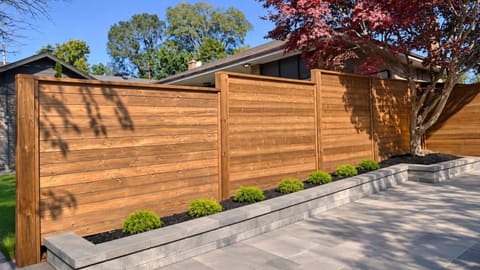
Best Privacy Fence Material for Ontario Winters
Best privacy fence material for Ontario winters: how cedar, composite, aluminum and masonry handle frost, snow and sun, and what to check before you build.
Guide
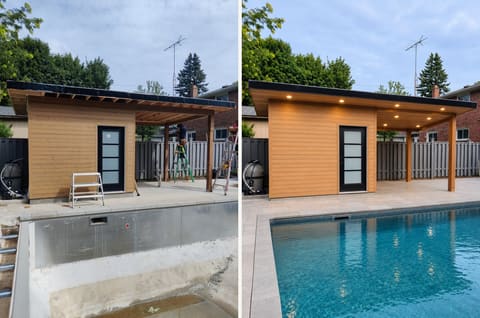
Does a Backyard Upgrade Add Value to a Toronto Home?
Backyard renovation ROI in Toronto: what makes an outdoor upgrade add value, which projects tend to pay back in daily use, and the mistakes that cost you.
Guide
Multi-Level Deck Design for Sloped GTA Lots
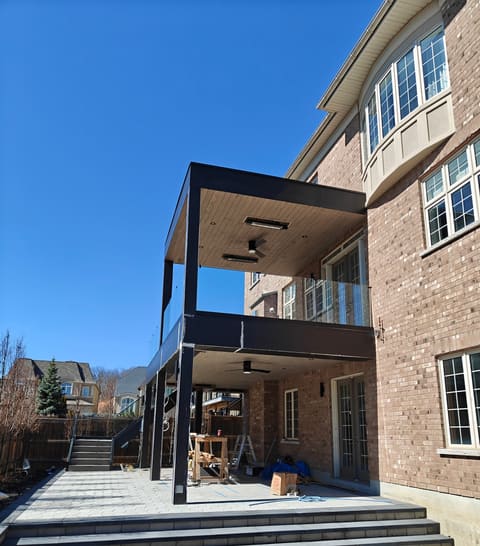
Multi level deck design for sloped GTA lots: how to plan levels, steps, guards, footings and drainage so a tiered deck works with your yard. See the checklist.
Guide
Call Before You Dig in Ontario: Locates for Backyard Projects
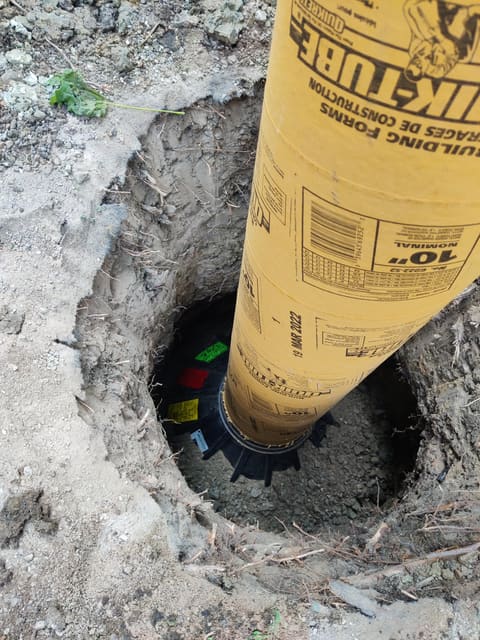
Call before you dig in Ontario: how Ontario One Call (Ontario Dig Authority) locates work, what private lines they miss, and how to plan. Read the guide.
See also our Landscaping & Hardscaping service.